
Juliet Ezeh
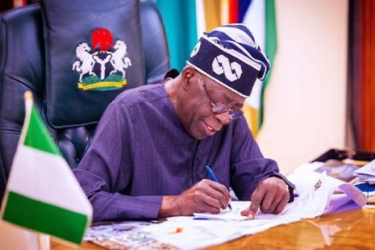
When President Bola Tinubu asked the Senate to approve a fresh $516 million external loan for the Sokoto–Badagry Superhighway, it was presented as a bold step toward national development. But beyond the promise of a modern transport corridor lies a deeper, more uncomfortable question troubling many Nigerians: are we building the future, or borrowing against it?
The proposed loan, to be sourced from Deutsche Bank, is intended to finance key sections of a 1,000-kilometre highway linking Sokoto to Badagry an ambitious project expected to cut travel time drastically and boost economic integration between Nigeria’s North-West and South-West regions. On paper, it looks like the kind of transformative infrastructure investment the country desperately needs.
But critics argue that the real issue is not the road it is the cost of building it.
Nigeria’s debt profile has been on a steady rise over the years, with increasing reliance on both domestic and external borrowing to fund government spending. While borrowing itself is not inherently bad, concerns begin to mount when loans accumulate faster than the country’s ability to repay them. For many analysts, the fear is simple: Nigeria may be approaching a tipping point.
Former Vice President Atiku Abubakar is among those raising the alarm. While acknowledging the importance of infrastructure, he has questioned the transparency and sustainability of the government’s borrowing strategy.
Atiku warned that taking on more foreign debt without clear terms, detailed cost-benefit analysis, and a credible repayment plan could worsen Nigeria’s fiscal position. His concern reflects a broader anxiety shared by many Nigerians who will ultimately bear the burden of these loans?
Economists are equally divided.
On one side are experts who believe infrastructure investment is essential for economic growth. They argue that projects like the Sokoto–Badagry Superhighway can unlock trade, create jobs, and generate long-term revenue that outweighs the cost of borrowing. From this perspective, debt used to fund productive assets is not a liability, but an investment.
However, others are not convinced.
Some economists point out that Nigeria’s biggest challenge is not the size of its economy, but the weakness of its revenue base. Government income remains heavily dependent on oil a volatile resource influenced by global prices beyond Nigeria’s control. This raises a critical issue: even if the highway generates economic activity, will it generate enough direct revenue to repay the loan?
The concern is not hypothetical. Nigeria already spends a significant portion of its revenue servicing existing debt. Adding more loans without strengthening revenue streams could tighten fiscal pressure even further, limiting the government’s ability to invest in other critical sectors like healthcare, education, and security.
Another layer of the debate centers on alternatives. Critics argue that the government may not be fully exploring options such as Public-Private Partnerships, concessions, or greater involvement of local financial institutions. These models could reduce reliance on foreign borrowing while keeping more economic value within the country.
Yet, supporters of the loan insist that opportunities like this should not be missed.
They highlight that the reported interest rate linked to global benchmarks is relatively competitive compared to previous borrowing costs. More importantly, they argue that infrastructure of this scale has a multiplier effect: improved roads lead to faster movement of goods, lower transportation costs, increased trade, and ultimately, higher economic productivity.
For everyday Nigerians, however, the debate is less about economic theory and more about lived reality.
Will this road reduce the cost of food?
Will it create jobs for young people?
Will it make life easier or simply add to the nation’s financial burden?
These are the questions shaping public sentiment.
Senate President Godswill Akpabio has described the project as a “game changer,” emphasizing the necessity of borrowing to fund critical infrastructure. The Senate has since referred the request to its Committee on Local and Foreign Debts, which is expected to review the proposal and report back.
But as lawmakers deliberate, the stakes remain high.
Nigeria stands at a crossroads where every borrowing decision carries long-term consequences. Infrastructure is undeniably essential for growth, yet fiscal discipline is equally critical for stability. Striking the right balance between the two is the real challenge.
The Sokoto–Badagry Superhighway may well become a symbol of progress or a cautionary tale about unchecked borrowing. The difference will not lie in the road itself, but in how it is financed, executed, and managed over time.
For now, one question continues to echo across the country:
Is Nigeria investing in its future or quietly mortgaging it?