
By Jason Obi
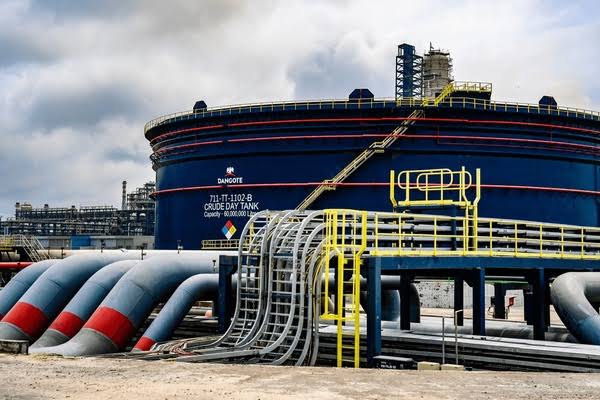
Nigeria’s fuel supply landscape is undergoing a historic shift as the Dangote Petroleum Refinery moves from gradual ramp-up to market dominance, displacing imports and tightening its grip on domestic petrol distribution.
In January 2026, the refinery delivered an average of 40.1 million litres of Premium Motor Spirit daily, marking a 25.3 per cent jump from the 32 million litres supplied in December 2025. The surge pushed domestic refining ahead of imports for the first time in recent history, with local production accounting for 62 per cent of national petrol supply during the month.
Imports, which previously dominated Nigeria’s downstream market, fell sharply. Average daily inflows declined by 42.2 per cent, dropping from 42.8 million litres in December to 24.8 million litres in January. The reversal signals a structural break in a market long dependent on foreign cargoes to meet local consumption.
Industry analysts say the development strengthens Nigeria’s energy security profile by reducing exposure to global shipping costs, foreign exchange volatility and supply chain disruptions. National petrol stock sufficiency improved to 33 days in January, up from 29.2 days a month earlier, providing a wider buffer against potential shortages or distribution hiccups.
Operationally, the refinery reached its full nameplate capacity of 650,000 barrels per day in early February after optimising its motor spirit production block. The milestone places the facility among the largest single-train refineries globally and reinforces its central role in the domestic supply chain.
The pricing impact is already visible. On February 10, the refinery reduced its gantry price by N25, adjusting from N799 to N774 per litre. The move was positioned as a competitive response to imported cargoes while reflecting improved production efficiency.
Market observers note that beyond price adjustments, the refinery’s scale is beginning to reshape bargaining power across the downstream value chain. With imports shrinking and domestic output rising, depot operators and marketers are recalibrating supply contracts around a locally driven model.
Despite the milestone, production has yet to meet Nigeria’s estimated daily demand benchmark of about 75 million litres. The refinery remains in a phased expansion phase, targeting sustained output increases that could eventually eliminate routine petrol imports altogether.
For policymakers, the January figures offer evidence that large-scale domestic refining can materially alter Nigeria’s fuel economics. For consumers and businesses, the key question remains whether sustained local production will translate into stable pricing and long-term relief from supply shocks.
What is clear, however, is that January 2026 may mark the turning point when Nigeria’s petrol market began pivoting decisively from import dependence to domestic dominance.