
By Blessing Bature
The Secretary and Oxygen Desk Officer at the Federal Ministry of Health and Social Welfare, Eno Edem, has said, oxygen is not a death sentence but a lifesaving medical intervention, raising concern over the persistent stigma surrounding its use in hospitals.
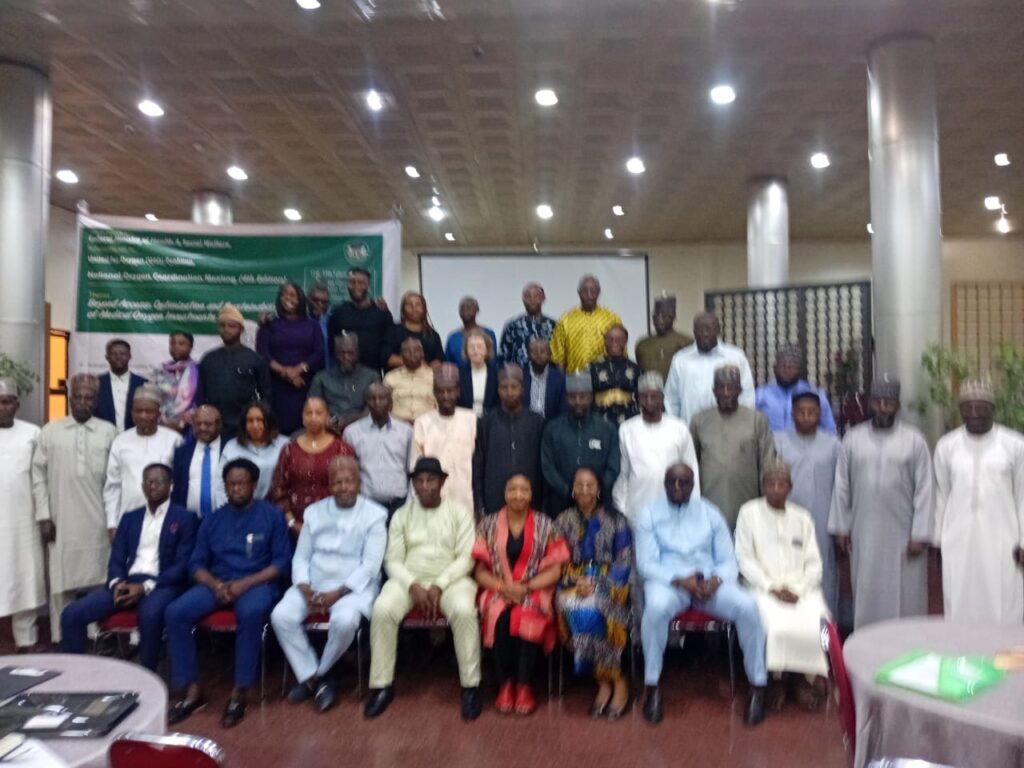
Eno Edem disclosed this at a closing ceremony of 2025 national oxygen coordination meeting held in Abuja, noted that many families still associate oxygen therapy with imminent death, a misconception she attributed to limited community awareness and inadequate sensitisation on its benefits.
She said the stigma surrounding medical oxygen remains a major challenge, as many people believe that once a patient is placed on oxygen, it is a sign of imminent death.
She explained that several factors have contributed to this negative perception, including limited community awareness and inadequate sensitisation.
According to her, healthcare workers also share part of the responsibility, as some fail to administer oxygen at the appropriate time.
“In some cases, oxygen is only given when a patient is already gasping. At that stage, the intervention may come too late, and when the patient eventually dies, the community associates the death with oxygen use,” she said.
Edem stressed that proper training of healthcare workers on when and how to administer oxygen would help improve patient outcomes and gradually change public perception. She noted that while partners such as UNICEF have trained over 1,000 healthcare workers across the country, the effort remains insufficient.
“We have continued to advocate for more training to avoid this negative perception. Oxygen is a medicine; it is not a death sentence,” she emphasised.
She also underscored the need for stronger collaboration between state hospital management boards and ministries of health to ensure accurate and reliable data for planning and decision-making. According to her, efforts have focused on strengthening governance, planning, sustainable financing and consensus building to secure political support and community buy-in.
“When key political leaders lend their voices, resource allocation improves, and the community gains confidence because there is validation from the top,” she said, expressing optimism that ongoing reforms would result in efficient, functional and financially sustainable oxygen systems.
On sensitisation efforts, Edem said the approach is shifting from relying solely on the National Orientation Agency to engaging frontline health workers as advocates.
She explained that clinicians’ communication style, body language and attitude while administering oxygen can significantly influence how patients and families perceive the treatment.
“If a caregiver’s body language suggests hopelessness, even a lifesaving intervention like oxygen may be viewed negatively. We are reorienting frontline health workers to become advocates who reassure patients and families,” she said.
Edem added that national-level “master trainers” are being equipped to cascade training to states, ensuring wider coverage despite limited manpower at the federal level. However, she acknowledged that financial constraints remain a recurring challenge in sustaining the programme.
Dr. Abdelhamid Mohamed, Oxygen Desk Officer for the North-East region, said the focus of this year’s meeting is on optimising and sustaining the investments already made in medical oxygen systems.
According to him, participants have drawn valuable lessons from presentations, shared experiences and discussions with partners, particularly on the importance of sustainability.
“If you look at the theme of this year’s meeting, it centres on optimisation and sustainability of the investments we have achieved so far. We have learned a lot from colleagues and partners, especially regarding how to sustain these gains,” he said.
Dr. Mohamed recalled that during the COVID-19 pandemic, only one oxygen plant was functional in his state. However, that number has now increased significantly.
“During COVID-19, we had just one functional oxygen plant. Today, we have about seven operational plants. The key question now is how to sustain this progress,” he added.
He expressed confidence that the knowledge and strategies gained from the meeting would help states maintain and strengthen oxygen infrastructure for the benefit of people across the North-East and the country at large.