
By Juliet Ezeh
Elections in the FCT, Rivers and Kano mark the first real test of the Electoral Act 2026, with BVAS and electronic transmission under focus as Tinubu calls for peaceful conduct.
Nigeria’s evolving electoral framework faces its first significant operational test this Saturday as voters head to the polls in the Federal Capital Territory (FCT), Rivers State and Kano State under the newly enacted Electoral Act 2026.
The February 21, 2026 elections are not only about filling vacant legislative seats; they also represent the first real-world application of the reforms embedded in the new electoral law. Observers say the outcome could shape public confidence in the credibility and transparency of future elections.
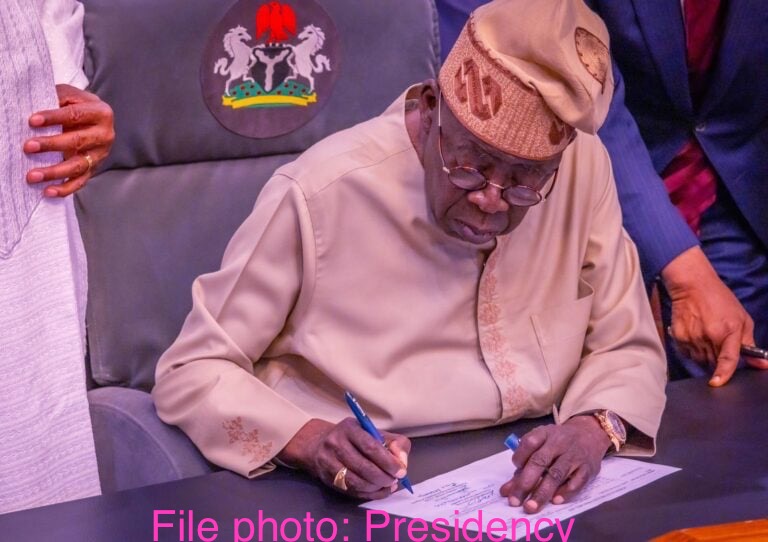
President Bola Tinubu has urged voters, security agencies and officials of the Independent National Electoral Commission to conduct themselves in an orderly and peaceful manner. In a statement issued by his Special Adviser on Information and Strategy, Bayo Onanuga, the President called on eligible Nigerians to come out and vote without fear, stressing that democracy flourishes best in an atmosphere of calm, tolerance and mutual respect.
Tinubu also cautioned political parties, candidates and supporters against violence, intimidation or inflammatory statements capable of undermining the credibility of the electoral process. He reaffirmed that security personnel are deployed to protect lives, property and the sanctity of the ballot, assuring citizens that his administration will continue to support institutions responsible for delivering free, fair and credible elections.
At the heart of Saturday’s polls is the Electoral Act 2026, which formally codifies the Bimodal Voter Accreditation System and provides for electronic transmission of results to INEC’s Result Viewing portal. However, the law retains manual collation as a contingency measure in areas experiencing poor network coverage. Under this hybrid framework, manually completed Form EC8A may serve as the primary basis for collation and declaration of results where electronic transmission is disrupted.
INEC has confirmed that major preparations have been concluded, including the distribution of non-sensitive materials, training of electoral officers and security personnel, and configuration of BVAS devices. The commission has also accredited 83 domestic and five foreign observer groups to monitor the elections.
In the FCT, voting will take place across six area councils, covering 1,680,315 registered voters spread across 2,822 polling units. Meanwhile, bye-elections will hold in Rivers and Kano states to fill vacancies arising from the resignation and death of sitting legislators.
In Rivers State, elections will be conducted in Ahoada East II and Khana II constituencies. In Kano State, polls will take place in Kano Municipal, which has 330,228 registered voters across 630 polling units, and in Ungogo constituency, with 205,418 voters across 384 polling units, following the deaths of two members of the State House of Assembly.
To ensure a peaceful electoral environment, the Minister of the Federal Capital Territory, Nyesom Wike, has imposed movement restrictions within the FCT from 8:00 p.m. on February 20 to 6:00 p.m. on February 21, 2026.
Beyond the immediate political stakes, the elections represent a crucial assessment of the effectiveness of BVAS technology, the reliability of electronic result transmission, and the practical viability of the hybrid collation system introduced by the Electoral Act 2026. The manner in which accreditation, voting, collation and result transmission are managed could significantly influence public trust in Nigeria’s democratic process ahead of future nationwide contests.