
By Juliet Ezeh
Nigeria’s rapidly expanding cryptocurrency market is drawing increased regulatory attention after authorities disclosed that digital asset transactions in the country have reached about $96bn.
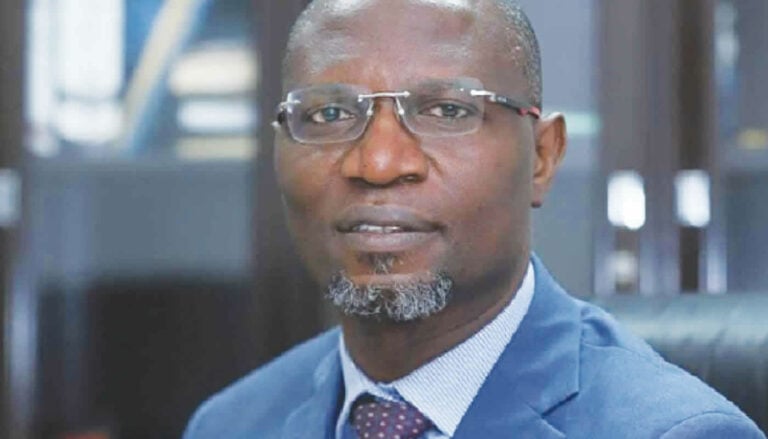
The Director-General of the Securities and Exchange Commission Nigeria, Emomotimi Agama, revealed the figure during a citizens and stakeholders engagement session organised by the Federal Ministry of Finance Nigeria in Abuja.
According to him, the massive scale of activity within Nigeria’s cryptocurrency ecosystem underscores the need for stronger oversight to ensure transparency and protect investors.
Agama said regulators are already moving to strengthen supervision of the sector through the recently enacted Investment and Securities Act 2025, which expands the commission’s authority to regulate digital assets and other financial technologies.
He explained that the legislation positions the SEC as the central regulator of Nigeria’s capital market while providing new tools to monitor risks emerging from virtual asset service providers.
“The cryptocurrency and digital asset space has become too significant to ignore,” he said, noting that regulators must ensure that innovation does not compromise financial stability.
Beyond the digital asset market, Agama highlighted the growing influence of Nigeria’s capital market in financing economic activities across multiple sectors.
According to him, the commission approved about ₦3.68 trillion in new capital market issuances in 2024, covering both equities and fixed-income instruments.
He also noted that the capital market played a crucial role during the recent banking sector recapitalisation, with more than 30 banks raising funds through the market to meet new capital requirements.
The SEC chief added that Nigeria’s capital market has experienced strong expansion, with overall market capitalisation increasing significantly in recent years.
He said the market’s size has grown from roughly ₦55 trillion in 2024 to about ₦127 trillion currently, raising its contribution to the economy.
The ratio of market capitalisation to Nigeria’s gross domestic product has also improved, rising from around 13 per cent to approximately 33 per cent.
Agama further disclosed that the commission has intensified efforts to protect investors by warning Nigerians against fraudulent investment schemes.
According to him, the SEC has issued more than 90 advisories alerting the public to suspicious financial offers and potential Ponzi schemes.
He cautioned that many victims are drawn to unregistered platforms promising unrealistic returns, urging investors to verify the legitimacy of investment opportunities through the commission.
The SEC is also encouraging state governments to access funding through the capital market to finance infrastructure projects, including markets, stadiums and other public facilities.
Agama explained that investors in subnational bonds are protected through the Irrevocable Standing Payment Order system, which guarantees repayment directly from states’ allocations from the Federation Account.
Looking ahead, the commission aims to deepen Nigeria’s capital market and raise the market capitalisation-to-GDP ratio closer to levels seen in emerging economies.
He cited India as an example, where the ratio stands at about 92 per cent, significantly higher than Nigeria’s current level.