
Fesochukwu Jason
Nigeria’s banking sector is emerging as a key driver of the country’s $1tn economy ambition, following a landmark recapitalisation exercise that has strengthened financial institutions and boosted investor confidence.
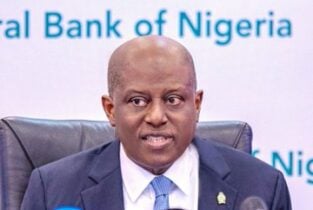
Speaking at the inaugural Africa Capital Forum in London on Tuesday, Central Bank of Nigeria (CBN) Governor Olayemi Cardoso hailed the exercise as a transformative moment for the nation’s financial system. He said, “32 banks have now met the new capital requirements. What we have now is a new system that has brought liquidity and transparency,” emphasizing that Nigerian banks are now better equipped to mobilize capital for long-term economic growth.
The forum, held alongside President Bola Tinubu’s UK state visit, convened global investors, banking executives, and development finance organisations to discuss strategies for strengthening capital mobilisation across Africa.
Executive Director of Zenith Bank, Akin Ogunranti, highlighted that over 72 per cent of the recapitalisation funds were raised domestically, signaling strong local investor confidence in Nigeria’s banking industry. Other banking leaders emphasized the broader impact of the reforms. First City Monument Bank’s Yemisi Edun said the exercise has expanded lending capacity across the sector, while First Bank’s Segun Alebiosu noted that recapitalised banks are now positioned to support larger transactions and attract international investments. UBA’s Oliver Alawuba underscored the bank’s growing continental footprint, with over 65 per cent of revenue now generated outside Nigeria, and GTB’s Miriam Olusanya pointed to strengthened international banking relationships and renewed investor trust.
The recapitalisation programme, announced in 2024, required banks to meet higher minimum capital thresholds through fresh capital injection, mergers, acquisitions, or license restructuring. According to CBN, the exercise has created a more stable financial environment, capable of supporting sustainable economic growth and positioning Nigerian banks as global players.
Special Adviser to the President, Sanyade Okoli, noted that government funding alone is insufficient for national development, stressing the need for partnerships that bring “sticky, equity capital” into the economy.
The forum underscores Nigeria’s ambition to leverage a strong, recapitalised banking sector to drive growth, attract foreign investment, and transform the country into a $1tn economy.