
Juliet Ezeh
Fresh concerns are emerging over tanker and gas handling safety in Nigeria following separate fire incidents in Lagos and Calabar that left dozens injured and one person dead.
The incidents, which occurred within hours of each other, have reignited debate over enforcement of safety standards in the transportation and handling of petroleum products.
Westbridge Reporters gathered that more than 40 people were affected across both locations, with properties also destroyed in the resulting fires.
Lagos crash highlights dangers of reckless driving
In Lagos, the incident occurred along the Lekki–Epe Expressway, where a tipper truck collided with a gas tanker, triggering a massive fire outbreak.
According to the Lagos State Emergency Management Agency (LASEMA), the crash was linked to overspeeding and loss of control.
The agency confirmed that one person died in the collision, while others sustained injuries. The fire quickly spread to nearby structures, destroying shops, warehouses, and vehicles before it was contained by emergency responders.
Westbridge Reporters understands that rapid intervention by fire services prevented what could have been a far more devastating incident in the densely populated area.
Gas handling failure triggers Calabar explosion
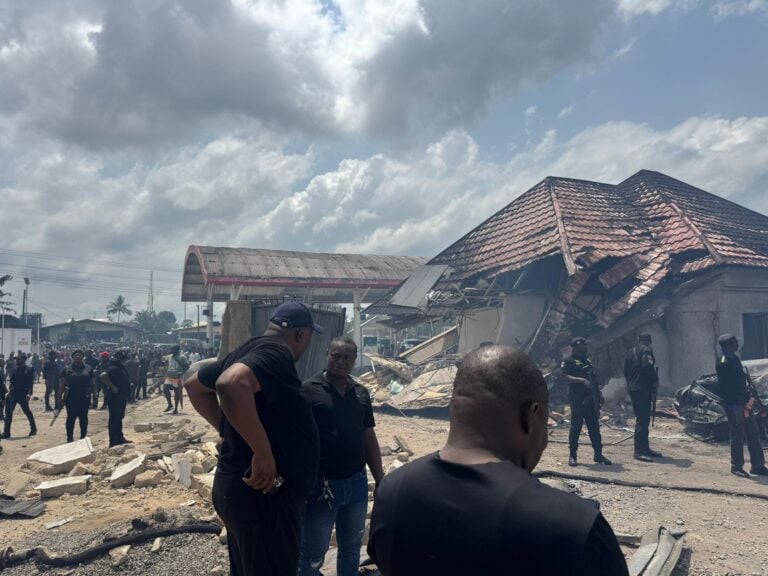
In a separate development, a gas explosion at a filling station in Calabar left at least 38 people with burn injuries.
Authorities said the explosion occurred during the transfer of gas from a storage tank when a hose reportedly detached, allowing gas to leak into the surrounding environment.
The leakage ignited moments later, causing panic among residents and customers at the station.
The University of Calabar Teaching Hospital confirmed that several victims with serious burns are currently receiving treatment.
Westbridge Reporters gathered that no fatalities were recorded in the Calabar incident, though the scale of injuries has raised fresh concerns.
Pattern of recurring tanker-related incidents
The back-to-back incidents have drawn attention to what safety experts describe as a recurring national problem.
Westbridge Reporters analysis indicates that tanker explosions and gas-related fires have become frequent due to a combination of factors, including poor vehicle maintenance, weak enforcement of safety regulations, and human error.
In urban areas like Lagos, high traffic density further increases the risk of catastrophic outcomes when accidents occur.
Emergency response under scrutiny
While emergency responders were able to contain both incidents, questions are being raised about preparedness and response time.
Eyewitness accounts from Calabar suggested delays in reaching emergency services, highlighting gaps that could prove critical in more severe situations.
Westbridge Reporters understands that improving response coordination and public awareness could significantly reduce casualties in future incidents.
Growing call for stricter safety enforcement
The latest incidents have intensified calls for stricter enforcement of safety protocols in the transportation and handling of petroleum products.
Industry observers warn that without stronger regulation and accountability, similar incidents may continue to occur, putting lives and property at risk.
Westbridge Reporters notes that addressing these challenges will require collaboration between government agencies, transport operators, and safety regulators.
Public safety concerns remain high
For residents in affected areas, the incidents have reinforced fears about living and operating near fuel transport routes and gas facilities.
As investigations continue, many Nigerians are calling for urgent reforms to prevent future tragedies and ensure safer handling of hazardous materials.
Westbridge Reporters understands that the outcome of these discussions could shape future safety policies across the country.