
Juliet Ezeh
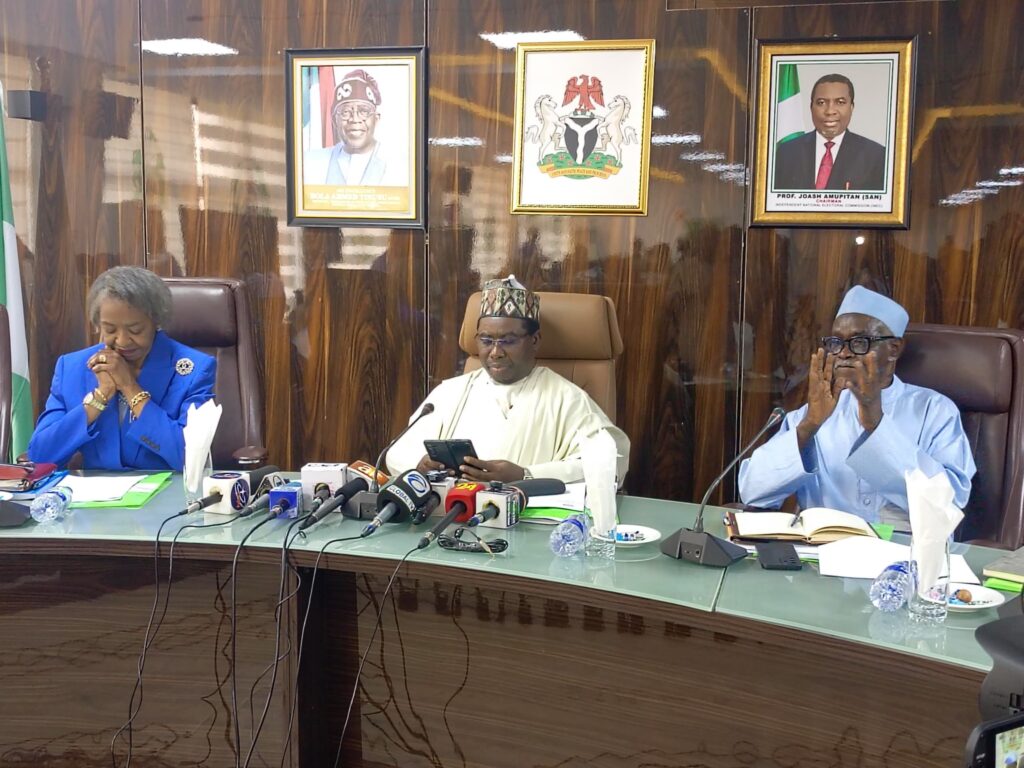
The Independent National Electoral Commission (INEC) and leaders of political parties on Tuesday held a consultative meeting in Abuja to review proposed regulations and guidelines ahead of the 2027 general elections.
The meeting, held at INEC headquarters, brought together the Commission, the Inter-Party Advisory Council (IPAC), and other key stakeholders to deliberate on reforms aimed at strengthening Nigeria’s electoral framework.
In his remarks, the INEC Chairman, Prof. Joash Amupitan, SAN, explained that the Commission had undertaken a comprehensive review of its 2022 regulations to align with the newly enacted Electoral Act 2026. He noted that the exercise was necessary to reflect current realities, stressing that credible elections begin long before polling day, particularly at the stage of party primaries and candidate selection.
Amupitan further disclosed that the updated guidelines cover key aspects such as political party registration, internal party operations, conduct of primaries, campaign activities, party financing, and conditions for deregistration. He emphasized that the reforms introduce clearer standards aimed at promoting transparency, accountability, and inclusivity, including provisions that encourage the participation of women, youths, and persons with disabilities.
He also highlighted that the Commission is working within a compressed electoral timeline, with the 2027 general elections scheduled for January and February, describing the process as one that requires surgical precision in implementation.
However, the National Chairman of IPAC, Dr. Yusuf Mamman Dantalle, expressed strong reservations about the Electoral Act 2026, describing it as a setback to Nigeria’s democratic progress. He argued that the law, which underpins INEC’s election timetable, imposes significant constraints on political parties and limits their operational flexibility.
Dantalle specifically called for a review of the mandatory direct primaries provision, urging the restoration of indirect primaries as an option for political parties. He also raised concerns over the timeline for submission of membership registers and the inclusion of National Identification Numbers, warning that such requirements could exclude a significant number of citizens due to limited access to registration facilities.
He further advocated for the mandatory electronic transmission of election results through the IReV portal immediately after announcement at polling units, stronger sanctions against vote buying, and the establishment of an Electoral Offences Commission to ensure accountability.
Both INEC and IPAC acknowledged the importance of continued dialogue in addressing concerns and strengthening the electoral process. While INEC maintained that the revised guidelines are designed to enhance electoral integrity, IPAC insisted that further legal reforms are necessary to restore public confidence and ensure credible, inclusive, and transparent elections.
The meeting underscored the growing need for cooperation among stakeholders as Nigeria prepares for the 2027 general elections, amid ongoing debates on electoral reforms, voter confidence, and democratic consolidation.