
Juliet Ezeh
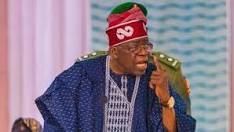
President Bola Tinubu has approved a N3.3 trillion debt settlement plan aimed at resolving long-standing financial obligations in Nigeria’s power sector, a move widely seen as a critical step toward stabilising electricity supply across the country.
The decision targets legacy debts accumulated between 2015 and 2025 under the Presidential Power Sector Financial Reforms Programme, a decade-long burden that has weakened power generation, disrupted gas supply, and contributed to persistent blackouts nationwide.
According to a statement by presidential spokesperson Bayo Onanuga, the approved amount represents a verified and final settlement designed to restore financial balance within the electricity value chain.
Implementation of the plan is already underway, with 15 power generation companies signing agreements worth N2.3 trillion. The Federal Government has raised N501 billion to kick-start the payments, out of which N223 billion has already been disbursed.
Officials say the intervention could significantly improve electricity generation by addressing one of the sector’s biggest bottlenecks — unpaid debts to power producers and gas suppliers.
For years, liquidity challenges have plagued Nigeria’s power sector, with generation companies struggling to operate efficiently due to delayed or incomplete payments for electricity supplied to the national grid.
The impact has been severe. Gas suppliers, owed huge sums, have repeatedly cut or reduced supply to thermal power plants, which account for the majority of Nigeria’s electricity generation. This has led to reduced output and frequent grid instability.
Energy experts believe that clearing a substantial portion of these debts could reverse this trend.
Special Adviser on Energy to the President, Olu Arowolo-Verheijen, described the initiative as more than just a financial settlement, noting that it is part of a broader strategy to rebuild confidence in the sector.
“This is about restoring trust across the power value chain — ensuring gas suppliers are paid, power plants remain operational, and electricity supply becomes more reliable,” she said.
The government also linked the reform to ongoing efforts to modernise the sector, including improved metering systems and service-based tariffs that align electricity costs with quality of supply.
Beyond households, authorities say the reforms will prioritise power supply to businesses, manufacturers, and small enterprises, sectors heavily impacted by unreliable electricity.
Reliable power is widely seen as essential for economic growth, job creation, and industrial development in Nigeria, where businesses often rely on expensive alternative energy sources such as diesel generators.
However, despite the optimism surrounding the N3.3 trillion settlement, concerns remain over the broader debt profile in the sector.
Industry data from power generation companies suggest that total outstanding liabilities could be significantly higher than the approved figure. Estimates indicate that debts owed to generation companies may have risen to nearly N7 trillion as of early 2026, driven by continued payment shortfalls.
According to industry stakeholders, the Nigerian Bulk Electricity Trading Plc has struggled to fully meet its financial obligations to power producers since the privatisation of the sector, creating a cycle of debt that has worsened over time.
A large portion of these liabilities is tied to gas suppliers, whose role is critical in sustaining electricity generation. Without consistent gas supply, thermal plants — which dominate Nigeria’s energy mix — cannot operate effectively.
This gap between official figures and industry estimates has raised questions about whether the current intervention will be sufficient to fully resolve the crisis.
Nevertheless, analysts say the government’s move signals a strong commitment to reform and could serve as a foundation for further interventions.
The planned rollout of a second phase of the programme later this year is expected to address remaining liabilities and strengthen structural reforms in the sector.
Experts argue that while clearing debts is essential, long-term stability will depend on addressing deeper issues such as cost-reflective tariffs, efficient revenue collection, and improved governance within the electricity market.
Without these measures, they warn, the sector could slip back into financial distress despite the current intervention.
For millions of Nigerians, the success of the debt settlement plan will ultimately be measured by one key outcome — improved and more reliable electricity supply.
If effectively implemented, the reform could mark a turning point in Nigeria’s power sector, reducing outages, lowering operational costs for businesses, and easing the daily burden on households.

Juliet Ezeh is the founder and chief reporter at Westbridge Reporters with over 7 years of experience in journalism. She covers crime, industry, policy, and social developments, delivering timely and accurate reporting.