
Fesochukwu Jason
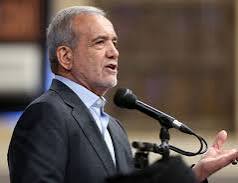
As tensions surge to a critical point in the Middle East, Iran’s President, Masoud Pezeshkian, has delivered one of the most defiant messages yet, declaring his readiness to die for his country just hours before a high-stakes deadline issued by Donald Trump.
In a statement posted on his official X account Tuesday, Pezeshkian framed the moment not just as a political standoff but as a test of national loyalty and sacrifice. He claimed that more than 14 million Iranians had already registered their willingness to give their lives in defense of the nation, adding that he too stands ready to make the ultimate sacrifice.
His words come at a time when diplomatic pressure is reaching a boiling point. Trump, escalating rhetoric from Washington, warned that failure to reach an agreement before the end of the day could result in catastrophic consequences, stating that an entire civilization could be wiped out overnight if talks collapse.
The sharp contrast in tone between both leaders highlights the fragile and dangerous state of the situation. On one side, a U.S. administration pushing for an urgent resolution with stark warnings. On the other, an Iranian leadership signaling resistance, unity, and a willingness to endure extreme consequences rather than concede under pressure.
Pezeshkian’s statement is not just symbolic; it is strategic. By invoking mass participation and sacrifice, he is reinforcing internal solidarity while sending a clear message to global powers that Iran will not easily yield. In a country where national pride and resistance are deeply embedded in political identity, such declarations are designed to rally public support and deter external threats.
However, analysts warn that this kind of rhetoric significantly raises the stakes. When leaders frame conflict in existential terms, it narrows the space for compromise. Negotiations become more difficult when both sides publicly commit to hardline positions, especially under intense global scrutiny.
For ordinary citizens, the situation is far more unsettling. Behind the political statements are real fears of escalation—economic disruption, security threats, and the potential for wider regional instability. The mention of “civilization” in Trump’s warning underscores just how severe the consequences could be if diplomacy fails.
This moment reflects a broader shift in global politics, where high-pressure deadlines and public ultimatums are increasingly used as negotiation tools. While they can force quicker decisions, they also risk triggering unintended outcomes, especially when both sides are unwilling to appear weak.
The coming hours are now critical. Diplomats, observers, and citizens around the world are watching closely to see whether dialogue will prevail or whether the situation will spiral into something far more destructive.
Pezeshkian’s vow, while powerful, places Iran firmly on a path of resistance. Trump’s warning, equally forceful, signals that patience from Washington may be running out.
Between these two positions lies a narrow window for diplomacy—one that may determine not just the future of Iran-U.S. relations, but the stability of an entire region.
As the deadline approaches, the world is left holding its breath, hoping that strong words do not translate into irreversible actions.

Juliet Ezeh is the founder and chief reporter at Westbridge Reporters with over 7 years of experience in journalism. She covers crime, industry, policy, and social developments, delivering timely and accurate reporting.