
Juliet Ezeh
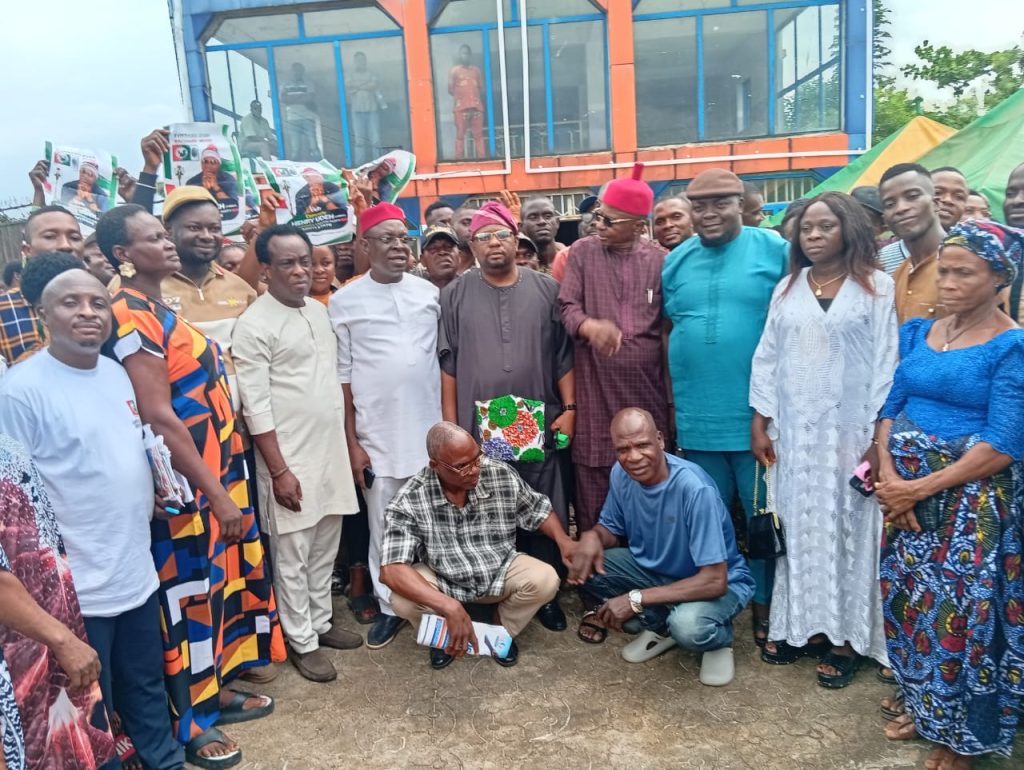
The Labour Party has taken a decisive step toward strengthening its political structure in Ebonyi State ahead of the 2027 general elections, with the emergence of Chief Henry Udeh as state chairman through a consensus-driven congress in Abakaliki.
The development signals what party leaders describe as a deliberate move to stabilise internal structures early and position the party as a serious contender in the next electoral cycle.
The congress, held at the party’s secretariat in Abakaliki, brought together stakeholders, party faithful, and observers in what many participants described as a rare show of unity and organisational discipline. Unlike the often contentious leadership contests seen in Nigeria’s political space, the process was concluded without opposition, as members unanimously endorsed Udeh’s leadership.
Party insiders say the consensus approach was not accidental but part of a broader strategy to avoid internal crises and project cohesion at a time when political alignments are already taking shape across the country.
The motion for adopting a consensus arrangement was moved and seconded by key stakeholders before being ratified through a voice vote, a process that underscored the level of agreement among members of the state chapter.
Alongside Udeh’s emergence, members of the State Executive Committee, including State Secretary Innocent Igiri, were returned to office, reinforcing continuity within the party’s leadership framework.
Observers believe this continuity could play a critical role in maintaining stability as the party prepares for the complex political negotiations and grassroots mobilisation required ahead of 2027.
The congress also attracted notable party figures, including the Labour Party’s 2023 governorship candidate in Ebonyi State, Chief Splendor Oko-Eze, and the party’s House of Representatives candidate for Abakaliki/Izzi Federal Constituency, Dr. Ezeh Emmanuel Ezeh.
Their presence added weight to the exercise and highlighted the importance the party attaches to its Ebonyi structure as part of a broader national strategy.
Officials of the Independent National Electoral Commission, as well as security agencies and representatives of the party’s national leadership, monitored the exercise to ensure compliance with electoral guidelines.
Speaking after the congress, Oko-Eze described the successful conduct of the party’s ward, local government, and state congresses as a major milestone that has repositioned the Labour Party in Ebonyi.
According to him, the peaceful nature of the process reflects the party’s growing maturity and readiness to challenge dominant political forces in future elections.
He expressed confidence that the Labour Party is on track to become a formidable political force by 2027, insisting that the foundation laid through the congresses would translate into electoral success.
Similarly, Dr. Ezeh Emmanuel Ezeh commended the party for demonstrating internal discipline, noting that the orderly conduct of the congress stands in contrast to the internal disputes that have plagued other political parties.
He, however, cautioned that unity must be sustained beyond the congress, urging members to focus on grassroots mobilisation and strategic planning if the party hopes to convert its internal strength into electoral victories.
In his acceptance speech, Chief Henry Udeh outlined a leadership vision centred on inclusiveness, transparency, and accountability.
He emphasised that the strength of any political party lies in its leadership structure, noting that a well-aligned leadership can drive growth, unity, and electoral success.
Udeh pledged to operate an open system that accommodates diverse opinions and encourages participation from all levels of the party, particularly at the grassroots.
He also stressed the importance of integrity and discipline, stating that the Labour Party must distinguish itself through ethical leadership and responsible management of party affairs.
Describing himself as a “master-servant,” Udeh said his administration would prioritise fairness, equity, and collective decision-making in order to build trust among party members.
On the issue of candidate selection ahead of the 2027 elections, the new chairman made it clear that the party would prioritise popularity and grassroots acceptance over financial influence.
According to him, the Labour Party is committed to giving ordinary members a voice in determining who represents them at the polls, a stance he believes will strengthen the party’s credibility.
He also disclosed that the state chapter is awaiting official guidelines from the party’s national leadership before commencing its primary election processes, adding that preparatory efforts are already underway.
Udeh expressed confidence in the party’s chances, stating that the Labour Party is not merely participating in elections but is determined to win.
Representing the national leadership, Deputy National Woman Leader Priscilla Ijeoma Chukwu described the congress as peaceful and well-organised, dismissing claims of factional divisions within the Ebonyi chapter.
She affirmed that the party remains united and urged the newly elected leadership to build on the existing harmony to strengthen the party’s structure.
Chukwu also called for sustained efforts in mobilisation and capacity building, noting that unity alone is not enough without strategic planning and engagement with voters.
For many party members, the outcome of the congress represents more than just a leadership transition. It is seen as the beginning of a renewed push to establish the Labour Party as a credible alternative in Ebonyi State and beyond.
As Nigeria’s political landscape gradually shifts toward the 2027 elections, the Labour Party’s ability to maintain internal cohesion while expanding its grassroots support may ultimately determine its success.
With a unified leadership now in place, the focus will shift to how effectively the party can translate its organisational strength into electoral gains in the years ahead.