
Juliet Ezeh
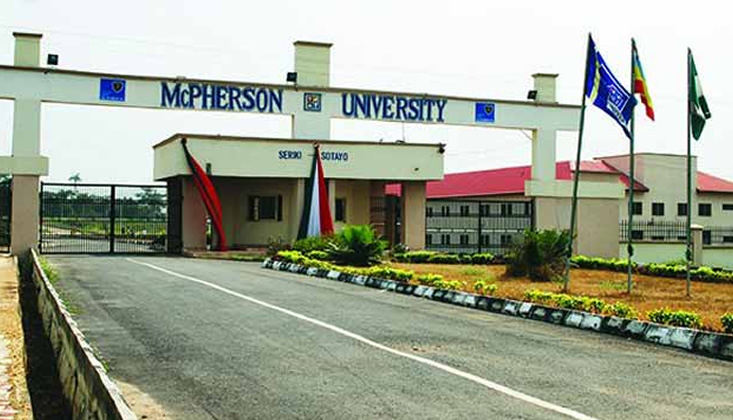
McPherson University, Ajebo, Ogun State, has recorded a major academic milestone after securing full accreditation for 10 undergraduate programmes from the National Universities Commission, strengthening its position as an emerging institution focused on quality education in Nigeria.
The development followed the commission’s October and November 2025 accreditation exercise, during which a team of evaluators conducted a comprehensive assessment of the university’s academic standards, facilities, staffing, and overall institutional capacity.
The announcement was made in a statement released on Monday by the university’s Director of Information and Public Relations, Tokunbo Olakunle, who described the achievement as a significant step forward for the institution.
According to Olakunle, the approval was formally communicated through a letter issued by the regulatory body, confirming that the programmes presented by the university met the required benchmarks for full accreditation.
He explained that the accreditation process involved detailed inspections and evaluations carried out by different panels assigned to various academic disciplines within the university.
“The approval was conveyed in a letter signed by the Director of Accreditation on behalf of the Executive Secretary of the Commission. The accreditation followed a comprehensive assessment exercise carried out by different teams during visits to the university in October and November 2025,” he said.
The accredited programmes cut across key academic fields, reflecting the university’s efforts to build a diverse and competitive curriculum that aligns with national development needs.
The programmes granted full accreditation include Accounting, Business Administration, Finance, Marketing, Public Health, History and Diplomatic Studies, Information Technology, Law, Biotechnology, and Economics.
These courses represent both traditional and emerging areas of study, positioning the university to produce graduates equipped with relevant skills for Nigeria’s evolving economy.
Olakunle noted that the accreditation is valid for a period of five years, after which the programmes will undergo another round of evaluation to ensure that standards are maintained or improved.
Full accreditation status is considered the highest level of approval granted by the commission, indicating that a programme has met all stipulated requirements in terms of curriculum quality, staffing, infrastructure, and learning resources.
For students and prospective applicants, this development offers reassurance that the university’s programmes meet nationally accepted academic standards and that their degrees will be widely recognised.
Education analysts say accreditation plays a critical role in safeguarding the integrity of Nigeria’s higher education system, ensuring that institutions adhere to quality benchmarks while promoting continuous improvement.
Reacting to the achievement, the Vice-Chancellor of the university, Professor Francis Igbasan, commended members of staff for their dedication and commitment, attributing the success to collective effort and a shared vision for excellence.
He described the accreditation as a testament to the institution’s steady progress and its determination to uphold high academic standards despite challenges facing the education sector.
“The achievement is a reflection of the hard work, discipline, and commitment of our academic and non-academic staff. It shows that we are on the right path in our pursuit of academic excellence,” he said.
He also emphasized that the university would not relent in its efforts to improve teaching, research, and community service, adding that the institution remains focused on producing graduates who can compete globally.
The Vice-Chancellor further noted that the accreditation would boost the university’s reputation and attract more students seeking quality education in a conducive learning environment.
Beyond institutional pride, the development is expected to have a broader impact on the university’s growth, including increased student enrolment, enhanced partnerships, and improved confidence among stakeholders.
Industry observers believe that universities with fully accredited programmes are better positioned to secure research opportunities, collaborations, and funding, as accreditation serves as a mark of credibility and reliability.
The successful accreditation also reflects the university’s investment in infrastructure and human capital, which are critical components assessed during the evaluation process.
Over the years, the institution has made efforts to upgrade its facilities, expand its academic offerings, and strengthen its workforce, all aimed at meeting regulatory standards and improving the learning experience.
For students currently enrolled in the accredited programmes, the development eliminates uncertainties about the status of their courses and enhances the value of their qualifications in the job market.
Prospective students and parents are also likely to view the accreditation as a key factor in choosing the university, especially in a competitive higher education landscape where quality assurance is a major concern.
In recent times, the regulatory commission has intensified its accreditation exercises to ensure that universities across the country comply with established standards and deliver quality education.
This move is part of broader efforts to address issues such as substandard programmes, inadequate facilities, and insufficient staffing, which have historically affected parts of the education sector.
By securing full accreditation for multiple programmes at once, McPherson University has demonstrated its readiness to meet these expectations and contribute meaningfully to national development through education.
Stakeholders in the education sector have continued to emphasize the importance of maintaining accreditation standards, urging institutions not to relax after initial approval but to sustain improvements over time.
As the five-year accreditation period begins, the university is expected to focus on consolidating its gains, addressing any identified gaps, and preparing for future evaluations.
The latest achievement marks a significant chapter in the institution’s journey and reinforces its ambition to become a leading centre of academic excellence in Nigeria.
With this milestone, McPherson University has not only strengthened its academic credibility but also positioned itself as a competitive player in the country’s higher education space, offering students a solid foundation for future success.