
Juliet Ezeh
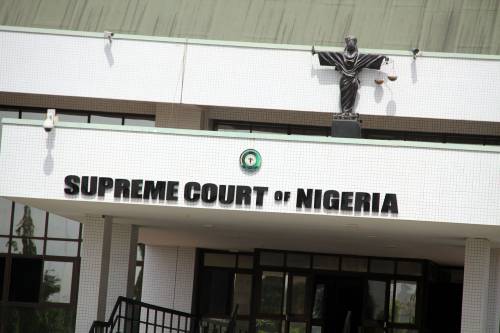
The Supreme Court of Nigeria is set to deliver judgments on Wednesday in two politically sensitive appeals involving leadership disputes within the African Democratic Congress and the Peoples Democratic Party, amid growing tensions over party control ahead of the 2027 general elections.
The cases, listed under Political Appeals on the Supreme Court’s official cause list, were scheduled for hearing on Thursday, April 30, 2026. Court records confirmed that judgment in the African Democratic Congress matter, marked SC/CV/180/2026, has been fixed for 2 pm, while the time for the Peoples Democratic Party case was yet to be confirmed.
The rulings are expected to address long-standing internal crises that have split both political parties into competing factions, each laying claim to legitimate leadership structures recognized for electoral purposes.
In the African Democratic Congress case, the dispute centers on a leadership contest between former Senate President David Mark and a rival faction led by Nafiu Bala Gombe. Both sides have been engaged in a prolonged legal battle over control of the party’s national structure.
Mark is challenging a March 12 decision of the Court of Appeal, which ordered all parties in the dispute to maintain the existing status quo regarding leadership arrangements. He argues that the appellate court exceeded its jurisdiction in intervening in what he describes as an internal party matter.
The appeal was heard on April 22 by a five-member panel of justices led by Justice Mohammed Garba. After hearing arguments from both sides, the panel reserved judgment to a later date.
Ahead of the ruling, counsel to the African Democratic Congress intensified pressure for a timely decision. The party’s legal team, led by S.E. Aruwa (SAN) & Co., wrote to the Chief Justice of Nigeria urging the court to deliver judgment within three days of the hearing.
In a letter dated April 28, 2026, the lawyers stated that the appeal had been heard expeditiously and that judgment was awaited. They also raised concerns over actions taken by the Independent National Electoral Commission in relation to the party’s leadership status.
According to the lawyers, INEC had acted on a lower court ruling to derecognize or remove the leadership of the party, a development they said has left the African Democratic Congress without a functioning leadership structure.
The legal team argued that despite the internal dispute, the party remains a registered political entity in Nigeria and is entitled to participate in national elections.
They linked the urgency of the matter to the election timetable already released by INEC for the 2027 general elections, stating that compliance with statutory requirements depends on the outcome of the Supreme Court’s decision.
“The African Democratic Congress’s ability to comply with these statutory requirements to participate in the 2027 General Elections is wholly dependent on the timely delivery of the judgment in the instant appeal,” the lawyers stated.
They warned that any delay in judgment could expose the party to the risk of exclusion from the electoral process and potentially disenfranchise its supporters across the country.
“Justice delayed, in this particular circumstance, would amount to justice denied,” the legal team added.
In a separate but related matter, the Supreme Court will also rule on the leadership dispute within the Peoples Democratic Party, which has similarly been marked by factional disagreements and court proceedings over control of party structures.
Although details of the PDP case were not fully confirmed at the time of filing this report, it is also listed among the Political Appeals scheduled for judgment by the apex court.
Both cases have drawn attention due to their implications for political party organization, candidate selection processes, and compliance with electoral guidelines ahead of the next general elections.
The disputes come at a time when political parties across the country are increasingly positioning themselves for early preparations ahead of 2027, including restructuring internal leadership, resolving factional disagreements, and meeting regulatory requirements set by the Independent National Electoral Commission.
The African Democratic Congress case in particular has remained one of the most closely watched internal party disputes in recent months due to its direct impact on party leadership recognition and electoral readiness.
The Supreme Court’s decision is expected to provide final clarity on the legal status of the contested leadership structures and determine the extent of judicial intervention in internal party affairs.
Court officials confirmed that all arrangements have been concluded for the delivery of judgments on the scheduled date, with both parties expected to be present.
Security has also been heightened around the Supreme Court premises in Abuja in anticipation of heightened political and legal interest in the rulings.
The judgments are expected to bring final resolution to the leadership disputes that have affected both political parties for months, with implications for their organizational stability and participation in future elections.