
Juliet Ezeh
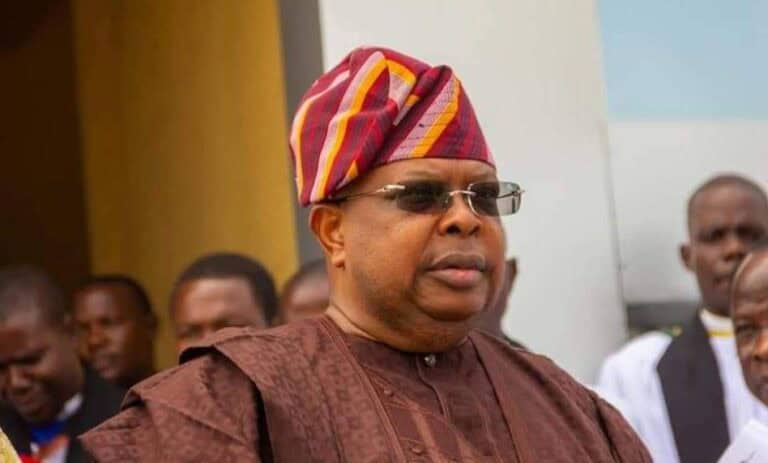
President Bola Tinubu has nominated Joseph Tegbe as the new Minister of Power, a move aimed at accelerating reforms in Nigeria’s struggling electricity sector.
The nomination, which has been formally transmitted to the Senate for confirmation, was disclosed in a statement issued on Thursday by the President’s Special Adviser on Information and Strategy, Bayo Onanuga.
According to the statement, Tegbe’s appointment is expected to reinforce ongoing efforts by the Federal Government to stabilize the national grid, deepen structural reforms, and attract long-term investments into the power sector.
“His nomination is expected to strengthen further ongoing efforts to reform the power sector, enhance grid stability, and attract sustainable investment in line with the Renewed Hope Agenda,” the statement read.
The nomination follows the resignation of the immediate past Minister of Power, Adebayo Adelabu, who stepped down in March 2026 to pursue his governorship ambition in Oyo State ahead of the 2027 general elections.
Adelabu’s exit from the cabinet was in compliance with a directive issued by President Tinubu mandating all political appointees seeking elective positions to resign from their roles.
With Tegbe’s nomination, the administration signals continuity in its reform-driven approach to the power sector, which has remained a critical challenge for Nigeria’s economic growth and industrial development.
Tegbe, an indigene of Oyo State, brings over three decades of experience spanning both the public and private sectors. Widely regarded as a fiscal and economic reform expert, his career has been marked by involvement in policy development, governance restructuring, and institutional transformation.
He previously served as Senior Partner and Head of Advisory Services at KPMG Africa, where he led several high-level initiatives focused on fiscal policy reforms, economic governance, and public sector efficiency across multiple African countries.
In his role at KPMG, Tegbe worked closely with governments and institutions to design and implement reforms aimed at improving transparency, accountability, and revenue generation frameworks.
Beyond his private sector accomplishments, Tegbe currently serves as Director General and Global Liaison for the Nigeria-China Strategic Partnership. In this capacity, he coordinates development projects and fosters economic collaboration between Nigeria and China, particularly in infrastructure financing, trade, and investment.
His experience in international partnerships is seen as a strategic advantage, especially as Nigeria seeks to mobilize foreign capital to revamp its power infrastructure and expand electricity access.
Tegbe also chaired the National Tax Policy Implementation Committee, a body inaugurated by the Federal Government in 2025 to drive the execution of Nigeria’s revised tax framework. Under his leadership, the committee worked on aligning fiscal policies with economic growth objectives and improving revenue collection mechanisms.
The Presidency noted that Tegbe’s track record in fiscal reforms and institutional strengthening positions him as a suitable candidate to tackle the structural challenges facing Nigeria’s electricity sector.
In addition to his economic policy background, Tegbe has been involved in regulatory and institutional reform efforts within the power sector. His engagements have included working with key agencies such as the Nigerian Electricity Regulatory Commission and the Nigerian Bulk Electricity Trading Company.
These experiences have provided him with insights into the operational and regulatory bottlenecks affecting electricity generation, transmission, and distribution in Nigeria.
The Nigerian power sector has long struggled with issues including inadequate generation capacity, weak transmission infrastructure, distribution inefficiencies, and financial constraints. Despite multiple reform efforts over the years, millions of Nigerians continue to experience unstable electricity supply.
The Tinubu administration has identified the power sector as a key pillar of its economic agenda, with a focus on improving energy access, boosting industrial productivity, and supporting small and medium-sized enterprises.
By nominating Tegbe, the government appears to be prioritizing technocratic expertise and reform experience in its efforts to address longstanding challenges in the sector.
Meanwhile, Adelabu’s resignation marks a transition as he prepares to re-enter partisan politics. The former minister, who previously contested the Oyo State governorship election in 2019, has declared his intention to run again in 2027.
In announcing his resignation earlier, Adelabu stated that his decision was guided by due process and in alignment with party regulations, as well as the directive issued by President Tinubu.
His tenure as Minister of Power saw ongoing efforts to improve electricity generation and distribution, although the sector continued to face persistent challenges.
With the nomination now before the Senate, attention shifts to the confirmation process, where lawmakers are expected to screen Tegbe and assess his suitability for the role.
If confirmed, Tegbe will assume responsibility for overseeing Nigeria’s power sector at a time when expectations are high for tangible improvements in electricity supply and infrastructure development.
The Presidency expressed confidence that the minister-designate would leverage his extensive experience to drive reforms and deliver measurable outcomes for Nigerians.
“The President expects the Minister-Designate, upon confirmation, to bring his extensive expertise to bear to advance critical reforms and deliver improved outcomes for Nigerians in the power sector,” the statement added.
As the confirmation process unfolds, stakeholders across the energy sector, including investors, regulators, and consumers, will be watching closely to see how the transition in leadership shapes the future of electricity reform in Nigeria.
The nomination underscores the administration’s continued focus on strengthening governance, enhancing sector performance, and unlocking the economic potential of a stable and reliable power supply system.