
Fesochukwu Jason
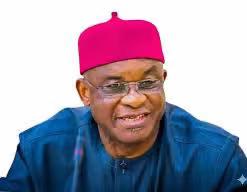
The Independent National Electoral Commission (INEC) has officially recognized Senator David Mark as the National Chairman of the African Democratic Congress (ADC), marking a decisive turning point in the prolonged leadership crisis that has rocked the party.
Checks on INEC’s official portal on Thursday confirmed the update, with Mark’s name now reinstated as the party’s National Chairman. This development follows a recent Supreme Court judgement that nullified earlier legal obstacles preventing his recognition.
The apex court ruling effectively overturned a controversial decision of the Court of Appeal, which had barred INEC from acknowledging Mark’s leadership. By setting aside that order, the Supreme Court cleared the path for the electoral body to restore what it now considers the legitimate leadership structure of the ADC.
A Legal Battle Finally Settled
The ADC leadership crisis had lingered for months, creating uncertainty within the party and raising concerns among political observers about its stability ahead of future elections.
At the center of the dispute was the legitimacy of Senator David Mark’s emergence as National Chairman, alongside Rauf Aregbesola as National Secretary. The controversy escalated when conflicting court orders created ambiguity over who should be recognized by INEC.
In April 2026, INEC took the drastic step of removing the names of both Mark and Aregbesola from its official records, signaling compliance with the subsisting court directive at the time. That move further deepened internal divisions within the party and left its leadership structure in limbo.
However, the Supreme Court’s intervention has now provided finality. In its ruling, the court emphasized that preservative or interim orders cannot outlive the substantive issues they were meant to protect. With proceedings concluded, the earlier restrictions lost their legal foundation.
INEC’s Swift Compliance
INEC’s decision to update its portal shortly after the Supreme Court judgement demonstrates its commitment to adhering strictly to judicial pronouncements.
The electoral body, which had previously been cautious in taking sides amid conflicting rulings, appears to have acted decisively once the apex court delivered its verdict.
Political analysts say this swift compliance is crucial for maintaining institutional credibility, especially in a political environment where legal disputes often shape party structures.
By restoring David Mark’s name, INEC has effectively validated his leadership and signaled to party members and stakeholders where authority now resides.
Implications for ADC’s Political Future
The recognition of David Mark as National Chairman carries significant implications for the ADC, a party that has been striving to position itself as a viable alternative in Nigeria’s political landscape.
The prolonged leadership tussle had weakened the party’s cohesion, disrupted its organizational activities, and cast doubt on its readiness for future electoral contests.
With the crisis now resolved, at least legally, the ADC faces the urgent task of rebuilding internal unity and restoring confidence among its members.
Party insiders suggest that Mark’s leadership could bring stability, given his extensive political experience and influence. A former Senate President, Mark is widely regarded as a seasoned politician capable of navigating complex political terrains.
However, challenges remain. The divisions created during the crisis may not disappear overnight, and reconciling aggrieved factions will require strategic engagement and compromise.
Broader Political Context
The ADC crisis and its eventual resolution highlight a recurring theme in Nigerian politics—internal party disputes often spilling into the judicial arena.
Courts have increasingly become arbiters of political leadership battles, a trend that underscores both the importance of the judiciary and the weaknesses in internal party conflict resolution mechanisms.
For INEC, the situation also underscores the delicate balance it must maintain. As an electoral umpire, it is bound by law to recognize party leadership based on valid court orders, even when those orders are contested.
The commission’s initial removal of Mark’s name and subsequent reinstatement illustrate how legal uncertainties can directly impact administrative decisions.
Reactions and Expectations
While official reactions from the ADC leadership are still emerging, the development is expected to trigger a mix of relief and renewed political maneuvering within the party.
Supporters of David Mark see the recognition as a victory for legality and due process, while opponents may continue to explore alternative avenues to assert their positions.
Political observers note that the real test lies ahead: whether the ADC can translate this legal victory into political strength.
“The court has spoken, and INEC has complied. What remains is for the party to put its house in order,” a political analyst in Abuja said.
The Road Ahead
With INEC’s recognition now in place, attention shifts to the next phase for the ADC—reconciliation, restructuring, and strategic positioning.
To regain relevance, the party must quickly move beyond internal disputes and focus on building a cohesive platform that can attract voters.
This includes clarifying its ideological stance, strengthening grassroots structures, and presenting credible candidates for future elections.
For David Mark, the immediate priority will likely be unifying the party and addressing grievances that arose during the crisis. His ability to do so will determine whether the ADC can emerge stronger or remain fragmented.
Conclusion
The recognition of David Mark as ADC National Chairman by INEC, following the Supreme Court judgement, marks a significant milestone in the party’s troubled journey.
It brings legal clarity to a dispute that had threatened the party’s stability and offers a fresh opportunity for rebuilding.
However, legal victory alone is not enough. The ADC must now confront the deeper political and organizational challenges exposed by the crisis.
As Nigeria’s political landscape continues to evolve, the party’s next moves will determine whether it can capitalize on this moment or fade further into the background.
For now, one thing is clear: the leadership question has been settled in the eyes of the law. What remains is the harder task of translating that clarity into unity, strength, and electoral relevance.