
Feso Jason
A disturbing encounter in Lagos has once again raised urgent questions about the safety of civilians and the conduct of uniformed personnel in public spaces. What began as a routine journey for a journalist quickly spiraled into a moment of fear, humiliation, and helplessness an experience that reflects a growing concern among Nigerians.
On a typical Saturday, the journalist boarded a tricycle heading from Ikeja to Ogba, expecting nothing more than the usual traffic delays that define city movement. However, along the route near a busy event centre, an incident unfolded that would leave both emotional and physical impact.
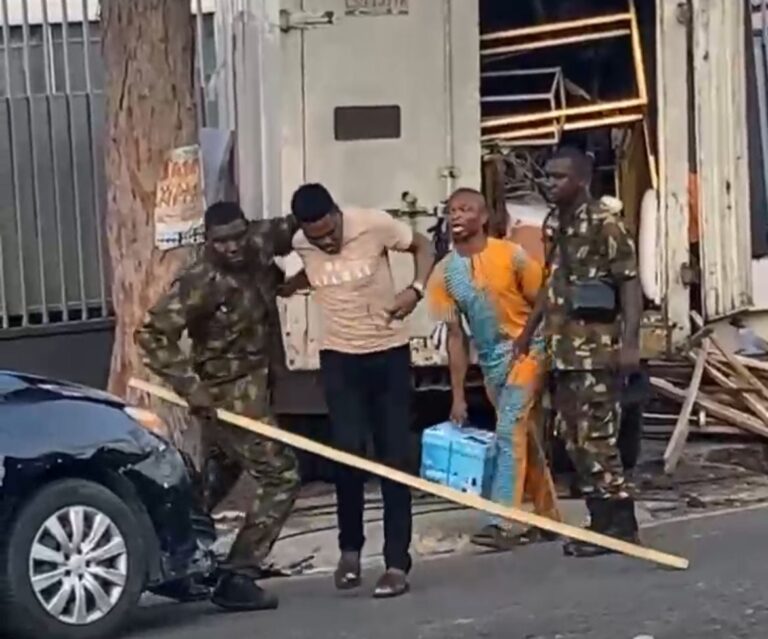
According to his account, soldiers stationed in the area were attempting to control traffic. In the process, one of them stopped a tricycle rider and allegedly imposed an unusual punishment ordering the driver to climb onto the roof of his vehicle. This act, rather than easing congestion, reportedly worsened the traffic situation.
Observing the unfolding scene from a nearby tricycle, the journalist voiced his concern, stating that the soldier’s actions were contributing to the gridlock. That single comment, he said, triggered an aggressive response.
What followed was not just a confrontation, but an alleged abuse of authority. The soldier reportedly dragged him out of the tricycle, issued threats, and demanded that he report himself to other officers. Confused and standing his ground, the journalist insisted he had done nothing wrong and questioned the legitimacy of such an order.
Tension escalated rapidly. As he attempted to explain himself to another officer who approached, he was suddenly slapped. The shock of the moment left him disoriented, but the ordeal did not end there.
Eyewitnesses later revealed that the situation became even more intense. The soldier allegedly continued to shove him and at one point attempted to strike him with a stick picked from the ground. In the chaos, his phone fell and smashed on the road an added loss to an already traumatic experience.
Bystanders, sensing the danger, intervened and urged him to leave before the situation worsened. Even as he retreated, he claimed that other soldiers confronted him and issued further threats, heightening the fear that the encounter could escalate beyond control.
This incident has stirred strong emotions, not just because of the physical assault, but because of what it represents. For many Nigerians, it reinforces a troubling narrative one where ordinary citizens feel vulnerable in the presence of those meant to protect them.
There is a growing sense of frustration among the public, especially as similar cases continue to surface. Each new report deepens the perception that accountability is often delayed or, in some cases, entirely absent.
Efforts to obtain an official response regarding the incident were reportedly unsuccessful at the time of filing. This silence, whether temporary or prolonged, adds to public anxiety and fuels calls for transparency.
Beyond the immediate incident, this situation highlights a broader issue: the relationship between security forces and civilians. Trust, once broken, is not easily restored. When authority is perceived as intimidation rather than protection, it creates a divide that can have long-term consequences for societal stability.
For journalists in particular, the implications are even more concerning. Their role often places them at the center of unfolding events, making them more exposed to such risks. An attack on a journalist is not just a personal violation it is seen by many as a threat to press freedom and the right to speak out.
Despite the distressing nature of the event, voices are rising to demand change. Citizens are calling for stricter oversight, better training, and clear consequences for misconduct. There is also a renewed push for individuals to document and report such incidents, ensuring they do not go unnoticed.
This moment, painful as it is, could serve as a turning point. It presents an opportunity for authorities to rebuild trust by taking decisive and transparent action. It also reminds the public of the importance of standing together against injustice, no matter how small or large.
As the story continues to unfold, one thing remains clear: no one should have to endure intimidation or violence for simply speaking up. The hope is that this incident will not be just another headline, but a catalyst for meaningful change.