
Feso Jason
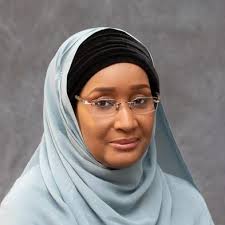
The Economic and Financial Crimes Commission has declared former Minister of Humanitarian Affairs, Disaster Management and Social Development, Sadiya Umar Farouq, wanted over an ongoing investigation linked to alleged financial misconduct and fraud-related allegations.
The development has triggered widespread reactions across Nigeria’s political and legal landscape, as the anti-graft agency intensifies efforts to investigate the handling of funds tied to several federal social intervention programmes implemented during the administration of former President Muhammadu Buhari.
According to reports, the EFCC’s declaration followed the former minister’s alleged failure to fully comply with investigative procedures connected to the case. The commission is currently probing the management and disbursement of billions of naira allocated to humanitarian and poverty alleviation programmes under the ministry during her tenure in office.
Sadiya Farouq served as Minister of Humanitarian Affairs, Disaster Management and Social Development under the Buhari administration and was responsible for overseeing a number of major federal intervention schemes targeted at vulnerable Nigerians across the country. Among the programmes supervised by the ministry were the Conditional Cash Transfer programme, N-Power initiatives, school feeding projects, and several emergency relief interventions aimed at reducing poverty and supporting low-income households.
The ministry played a critical role during the Buhari administration, especially during periods of economic hardship, natural disasters, and the COVID-19 pandemic, when millions of Nigerians depended on government intervention programmes for support. However, questions have continued to emerge regarding transparency, accountability, and the management of funds allocated to some of the programmes.
The EFCC’s latest action is being viewed by many analysts as a significant escalation in the ongoing investigation into the ministry’s financial activities. Legal observers believe the declaration could pave the way for stronger enforcement measures if the former minister fails to present herself before the commission or respond to the allegations levelled against her.
EFCC Intensifies Probe Into Humanitarian Funds
The anti-corruption agency has in recent months increased scrutiny of government ministries, departments, and agencies over allegations involving mismanagement of public funds and abuse of office. Investigators are reportedly examining financial records, contracts, payment approvals, and disbursement processes linked to various humanitarian initiatives administered during Farouq’s time in office.
Sources familiar with the investigation disclosed that the probe is focused on the alleged movement and utilisation of large sums earmarked for social welfare programmes intended to benefit vulnerable Nigerians. The EFCC is also said to be working to establish whether due process was followed in the allocation and execution of contracts tied to the ministry’s operations.
Although the commission has yet to release full details of the allegations publicly, the declaration of the former minister as wanted has added a new dimension to the high-profile investigation and attracted nationwide attention.
Political analysts say the case could become one of the most closely watched anti-corruption investigations involving a former cabinet member of the Buhari administration. The development has also reignited public debate about transparency and accountability in the management of social intervention funds in Nigeria.
Several civil society organisations and anti-corruption advocates have repeatedly called for thorough investigations into the handling of public funds under different government intervention programmes. Many Nigerians have also demanded greater transparency regarding how billions of naira allocated for poverty reduction and humanitarian support were spent.
The controversy surrounding the ministry had generated public attention even while Farouq remained in office, with critics raising concerns over the implementation and monitoring of certain programmes. Despite repeated assurances by government officials that due process was followed, allegations of irregularities persisted.
Public Reactions Trail EFCC Declaration
The EFCC’s declaration of Sadiya Farouq as wanted has generated mixed reactions from Nigerians, especially on social media platforms where discussions about accountability and corruption in public office continue to dominate national conversations.
While some Nigerians applauded the anti-graft agency for taking decisive action, others stressed the need for due process and fairness in handling the investigation. Legal experts have also noted that being declared wanted does not amount to a conviction, emphasizing that every suspect remains innocent until proven guilty by a competent court of law.
Some political observers believe the case may have broader political implications given Farouq’s prominent role in the Buhari administration and her involvement in high-profile federal programmes. Others argue that the investigation could serve as a test of the EFCC’s commitment to pursuing accountability regardless of political affiliation or status.
The declaration is also expected to increase pressure on other former government officials currently facing investigations over allegations linked to public funds and contract awards during their time in office.
As investigations continue, attention remains focused on the next steps to be taken by the EFCC and whether the former minister will voluntarily submit herself for questioning or challenge the declaration through legal channels.
Silence From Former Minister and Legal Team
As of the time of filing this report, Sadiya Farouq and members of her legal team had not publicly reacted to the EFCC’s declaration or the allegations reportedly contained in the charges before the court.
The absence of an official response has further fueled public speculation surrounding the matter, with many Nigerians awaiting clarification from the former minister regarding the allegations and the ongoing investigation.
Legal practitioners say Farouq retains the constitutional right to defend herself against any accusations brought against her and may choose to respond through formal legal processes in the coming days.
Meanwhile, the EFCC has continued to reiterate its commitment to combating corruption and ensuring accountability in the management of public resources. The commission has repeatedly maintained that its operations are guided by evidence, due process, and the rule of law.
The latest development comes amid renewed national conversations about transparency in governance, especially concerning programmes designed to provide relief for economically disadvantaged Nigerians. Many citizens and advocacy groups continue to call for stronger oversight mechanisms to ensure that public funds meant for humanitarian purposes are properly managed and effectively utilized.
Observers believe the outcome of the investigation could have far-reaching implications for future government intervention programmes and anti-corruption efforts in Nigeria. The case is also expected to remain in the public spotlight as more details emerge from the ongoing probe.
For now, Nigerians continue to monitor developments closely as the EFCC pushes ahead with its investigation into one of the most high-profile cases involving a former cabinet member of the Buhari administration.