
Juliet Ezeh
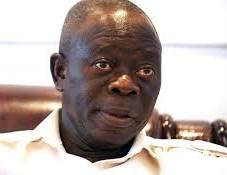
The senator representing Edo North, Adams Oshiomhole, has reignited national debate after defending his call for the nationalisation of South African-owned companies operating in Nigeria, insisting that the protection of Nigerian lives must come before economic interests.
Speaking during an interview on Arise News on Tuesday, Oshiomhole stood firmly by his earlier remarks on the Senate floor, where he urged the Federal Government to take decisive action in response to recurring xenophobic attacks against Nigerians in South Africa.
At the centre of his proposal is telecommunications giant MTN, one of the largest foreign investors in Nigeria. The former Edo State governor argued that Nigeria must assert its sovereignty and protect its citizens, even if it requires temporarily taking control of foreign-owned businesses.
“I am aware that MTN is quoted, and therefore Nigerian shareholders can hold on, but we take away the South African rights,” he said, suggesting that such companies could later be re-privatised under Nigerian ownership.
A Call Driven by Repeated Violence
Oshiomhole’s position follows renewed outrage over xenophobic violence in South Africa, where Nigerians have repeatedly been targeted over the years.
He described a troubling pattern of injustice, claiming that perpetrators of past attacks have not been held accountable.
“When a country, for the first time, killed Nigerians, they got away with it. The second time, they killed Nigerians; they got away with it. Third time, they killed Nigerians; they got away with it,” he said.
He also referenced past diplomatic engagements, alleging that agreements reached between both countries were not honoured and that justice has remained elusive.
Economic Retaliation or Risk?
Beyond the emotional tone of his remarks, the senator’s proposal introduces a bold policy option—economic retaliation.
According to him, nationalisation would not only serve as a response to protect Nigerians but also help retain wealth within the country by limiting profit repatriation.
“And because of the issue… you nationalise, and then you re-privatise it so that Nigerians can take it over, and the profit they are taking out of Nigeria will be retained here,” he said.
However, the suggestion has raised concerns among economists and policy analysts, who warn that such a move could damage Nigeria’s investment climate, discourage foreign investors, and lead to legal disputes under international agreements.
Life Over Investment
Oshiomhole framed his argument as a moral issue rather than an economic one, insisting that no investment is worth the loss of Nigerian lives.
“If anything leads to the death of Nigeria, what is the value of wealth to the dead?” he asked.
“We don’t want investors who invest at the expense of human blood. Even in my poverty, I value my life.”
His comments reflect growing frustration among Nigerians who believe the country has not done enough to protect its citizens abroad or demand accountability for attacks against them.
Diplomatic Strain
The senator also claimed that South African authorities only took meaningful action after Nigeria applied pressure, suggesting that public condemnation of the attacks came late.
He argued that stronger diplomatic and economic responses are necessary to ensure the safety of Nigerians living outside the country.
Such remarks are likely to deepen tensions between both nations, which maintain strong economic ties despite periodic diplomatic disagreements.
A Nation Weighs Its Priorities
Oshiomhole’s comments have sparked mixed reactions across Nigeria. While some support his hardline stance, others caution that nationalisation could have serious economic consequences.
Foreign companies play a significant role in Nigeria’s economy, providing jobs, tax revenue, and infrastructure investment. Any abrupt policy shift could trigger uncertainty in the business environment.
Still, the debate he has ignited goes beyond policy—it raises a fundamental question about national priorities.
“How should a country balance economic growth with the protection of its citizens?”
For Oshiomhole, the answer is clear: life must come first.
As discussions continue, the Federal Government has yet to officially respond to his proposal. Whether or not it gains traction, his remarks have forced a national conversation about safety, sovereignty, and the true cost of foreign investment.