
Juliet Ezeh
President Bola Tinubu has confirmed that a high-ranking commander of the Islamic State has been killed in a joint military operation carried out by Nigerian troops and United States forces in the Lake Chad region.
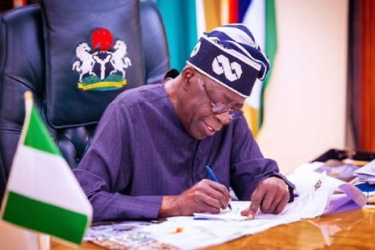
The announcement, made on Saturday through a personally signed statement, revealed that the operation targeted Abu-Bilal Al-Manuki, widely known as Abu-Mainok, a figure believed to hold a key position within the extremist group’s structure.
Tinubu said the mission was the result of coordinated intelligence and tactical planning between both countries, leading to a successful strike on the militant leader’s hideout.
According to the President, the operation not only eliminated the top commander but also took out several individuals linked to his network. He described the outcome as a major success in the ongoing effort to dismantle terrorist activities in the region.
“This operation reflects the strength of collaboration between Nigeria and the United States in confronting shared security threats,” Tinubu stated, adding that the development represents meaningful progress in the fight against insurgency.
The Lake Chad Basin has remained a critical zone of military concern due to persistent attacks by extremist groups operating across borders. Over the years, the area has served as a base for coordinated assaults on both civilian communities and security formations.
Tinubu commended the forces involved in the mission, highlighting their discipline and execution during what he described as a complex operation.
He also acknowledged the role of the United States in supporting Nigeria’s counterterrorism efforts, noting that continued cooperation remains vital in addressing threats that extend beyond national boundaries.
Security operations in the North-East have intensified in recent months, with the Nigerian military increasing pressure on armed groups through targeted offensives. Authorities say the goal is to weaken insurgent networks and reclaim territories previously affected by violence.
Although details of the operation remain limited, officials confirmed that the strike was based on credible intelligence regarding the location and movements of the militant leader.
The United States also issued a statement confirming the mission, describing it as a carefully coordinated effort aimed at neutralising a significant threat within the global extremist network.
The operation was reportedly carried out after tracking the activities of the target over a period of time. Officials indicated that his role within the group made him a priority target due to his influence and operational reach.
The removal of such a figure is expected to impact the group’s activities, particularly within the Lake Chad region, where insurgent groups have continued to stage attacks despite ongoing military efforts.
Tinubu reiterated Nigeria’s commitment to sustaining pressure on terrorist groups, stating that security agencies will continue operations until all threats are addressed.
“Our objective remains clear — to protect lives, secure communities, and ensure that those responsible for acts of terror are brought to an end,” he said.
He further assured that the government would not relent in its pursuit of peace and stability, especially in areas that have experienced prolonged insecurity.
The President’s statement comes amid renewed efforts by security forces to improve coordination with international partners, particularly in intelligence gathering and counterterrorism strategies.
Observers say such partnerships are becoming increasingly important as extremist groups adapt their tactics and expand their reach across regions.
For communities affected by insurgency, developments like this signal ongoing efforts by authorities to restore safety and rebuild confidence.
While military operations continue, the government has maintained that long-term stability will also depend on sustained cooperation, both locally and internationally.
Saturday’s announcement marks another development in Nigeria’s fight against terrorism, as authorities push forward with efforts to dismantle networks responsible for years of violence in the region.