
Lilian Ugwu
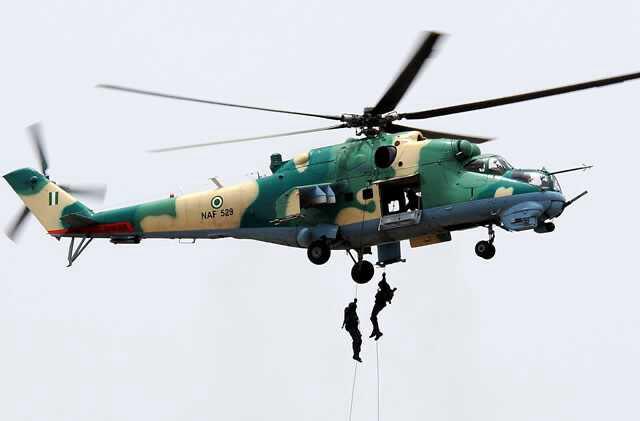
A major counterterrorism breakthrough has been recorded in northern Nigeria as the Nigerian Air Force carried out a precision airstrike that destroyed a terrorist hideout in Katsina State, killing several fighters and crippling a key logistics network used for operations across the region.
The air operation, conducted under Operation Fansan Yamma, targeted a heavily concealed enclave in the Dan-Aji Forest area of Faskari Local Government Area, an area long identified by security agencies as a dangerous corridor for armed groups operating across parts of Katsina State.
According to a statement released in Abuja by the Director of Public Relations and Information of the Nigerian Air Force, Air Commodore Ehimen Ejodame, the mission was executed on May 1 following intelligence reports indicating a resurgence of terrorist movement and coordination within the forest belt.
Intelligence-Led Strike Targets Terror Network
Military sources confirmed that the operation was not a random attack but a carefully planned precision strike based on actionable intelligence gathered over time. Surveillance had reportedly tracked unusual movements of armed fighters using motorcycles to transport weapons, supplies, and food items deep within the forest.
The targeted location was described as a strategic logistics hub connected to a known terrorist commander identified as Abasu Aiki, whose network is believed to operate across the Faskari, Kankara, and Funtua axis.
Security analysts say this axis has remained a persistent concern due to its dense forest cover, which provides natural concealment for armed groups, making ground operations difficult and risky.
The air component of the operation reportedly deployed surveillance and combat aircraft to identify and confirm the presence of armed fighters before launching the strike.
Terror Fighters Caught in the Open
During the mission, air assets reportedly observed armed fighters moving in and out of the enclave, some mounted on motorcycles while others gathered within makeshift structures believed to be used for coordination and storage.
Once positive identification was confirmed, a coordinated strike was executed on the location.
The impact of the attack was immediate and devastating. Eyewitness intelligence assessments indicated that multiple fighters were neutralised during the strike, while the entire logistics base was completely destroyed.
The force of the explosions triggered secondary blasts within the enclave, suggesting the presence of stored fuel, ammunition, or other volatile materials used to support ongoing operations.
Flames reportedly engulfed the area shortly after the strike, further reducing the chances of survival for anyone within the targeted zone and severely damaging the group’s infrastructure.
Major Blow to Terror Logistics and Movement
Military officials say the destruction of the hideout represents a significant setback for the terrorist network operating in the region.
Beyond the immediate casualties, the strike is believed to have disrupted critical supply chains, communication routes, and mobility networks that the group relies on for survival and expansion.
The forest enclave had allegedly served as a staging point for attacks, recruitment, and coordination of movements across surrounding communities. Its destruction is expected to weaken the operational capacity of fighters in the area and limit their ability to regroup in the short term.
Security experts note that logistics hubs are often more strategically important than individual fighters, as they enable sustained operations. By dismantling such a base, the air force has effectively degraded the group’s ability to function as a coordinated unit.
Renewed Pressure on Armed Groups in the North
The latest airstrike comes amid intensified military operations across northern Nigeria, where security forces have increased pressure on armed groups through coordinated land and air missions.
In recent months, the Nigerian Air Force has stepped up intelligence-driven operations aimed at identifying hideouts, intercepting movements, and preventing regrouping efforts by non-state armed actors.
Officials say the goal is not only to respond to threats but to proactively deny terrorists safe havens where they can plan attacks or evade ground troops.
The success of the Katsina operation reflects a broader shift toward precision targeting, where intelligence, surveillance, and rapid response capabilities are combined to maximize impact while minimizing collateral damage.
Community Relief and Security Concerns
In affected communities across Faskari, Kankara, and Funtua, news of the airstrike has been met with mixed reactions—relief over the weakening of armed groups, but continued concern about long-term safety.
Residents in rural areas of Katsina State have for years lived under the threat of banditry and terrorist-linked violence, with reports of attacks on villages, highways, and farming communities disrupting daily life and economic activity.
While military operations have provided some level of reassurance, many locals say sustained security presence and ground stabilization efforts are needed to prevent armed groups from returning to abandoned forest zones.
Military Reaffirms Commitment to Operations
The Nigerian Air Force has reaffirmed its commitment to sustaining pressure on terrorist and criminal networks across the country.
According to the statement, the success of the Katsina airstrike underscores the force’s determination to deny criminals safe havens and dismantle their operational infrastructure wherever they are found.
Officials emphasized that such operations will continue as part of broader efforts under national security frameworks designed to restore peace and stability in affected regions.
The air force also highlighted the importance of intelligence sharing between military units and local informants, noting that timely and accurate information remains critical to the success of such precision operations.
A Strategic Shift in Counterterrorism Approach
Security observers say the operation reflects an ongoing evolution in Nigeria’s counterterrorism strategy, which increasingly relies on air power and intelligence coordination to target remote and difficult terrain.
Forest belts in northern Nigeria have long posed a challenge for ground forces due to their size, density, and accessibility issues. However, improved aerial surveillance and strike capabilities have allowed the military to reach previously inaccessible targets.
The Katsina strike is being viewed as part of a wider campaign aimed at dismantling terrorist logistics networks rather than focusing solely on direct battlefield engagement.
By targeting supply hubs, commanders, and movement corridors, the military aims to weaken the operational foundation of armed groups and reduce their ability to sustain prolonged attacks.
Conclusion: Pressure Intensifies on Armed Groups
The destruction of the terrorist enclave in Katsina marks another step in the ongoing battle against insecurity in northern Nigeria.
While the full impact of the operation is still being assessed, early reports suggest significant damage to both personnel and infrastructure used by the group.
As military operations continue, authorities remain focused on sustaining momentum, improving intelligence-driven strikes, and restoring stability to communities affected by years of violence.
For now, the message from the Nigerian Air Force is clear: there will be no safe haven for terrorist groups operating within the country’s borders.