
Chinedu Obieze
A high-stakes political meeting is currently underway in Benue State as key government figures move urgently to resolve a deepening crisis threatening party unity and stability in the state.
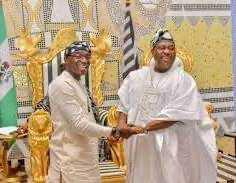
The Secretary to the Government of the Federation, George Akume, and Benue State Governor, Hyacinth Alia, are locked in a closed-door meeting at the Government House in Makurdi. The development follows a firm directive from President Bola Tinubu, who has reportedly ordered both leaders to put aside their differences and find a lasting solution without further delay.
The meeting, which has drawn significant attention across political circles, is seen as a critical step toward addressing the lingering internal crisis within the ruling party in Benue State. For weeks, tensions have continued to build between loyalists of both leaders, raising concerns about the party’s cohesion and its ability to function effectively at both state and national levels.
Initially scheduled to take place on Thursday, April 30, 2026, the stakeholders’ meeting was abruptly postponed, a move that further fueled speculation about the depth of the disagreement and the challenges involved in bringing both sides to the table. Its eventual rescheduling to Sunday, May 3, underscores the urgency of the situation and the increasing pressure from the presidency to resolve the matter quickly.
The closed-door nature of the meeting suggests that sensitive issues are being discussed, away from public scrutiny. Political observers believe that the conflict may involve control of party structures, influence over appointments, and broader disagreements on governance and leadership direction within the state.
In what appears to be a carefully structured peace effort, the meeting includes a balanced representation from both camps. Ten elders and stakeholders aligned with Akume are present, alongside ten from Governor Alia’s camp. Also in attendance are members of the Benue State House of Assembly, representatives from the National Assembly, and several federal government appointees from the state.
This wide-ranging participation reflects the seriousness of the crisis and the need for a collective resolution that will be accepted across different factions. It also signals an attempt to ensure that whatever agreement is reached carries enough political weight to hold and prevent further divisions.
For many within the party, the crisis in Benue is more than just a local disagreement. It is increasingly being viewed as a test case for how internal conflicts are managed within the ruling party, especially under the current administration. With President Tinubu’s direct involvement, the outcome of this meeting could set a precedent for handling similar disputes in other states.
There are also concerns about the potential political consequences if the crisis is not resolved promptly. A prolonged rift could weaken party structures in Benue, affect governance, and create openings for opposition forces to gain ground. This is particularly significant given the strategic importance of the state in national politics.
Sources close to the meeting suggest that both sides are under pressure to make concessions. While details of the discussions remain undisclosed, there is cautious optimism that a compromise may be reached. However, some insiders warn that deep-rooted grievances may not be easily resolved in a single meeting.
Residents and political stakeholders in the state are watching closely, hoping that the talks will lead to stability and renewed focus on governance. For many, the priority is clear: an end to internal wrangling and a return to addressing pressing issues affecting the people of Benue State.
As the meeting continues behind closed doors, uncertainty remains over its outcome. Will this high-level intervention finally bring lasting peace, or will it merely offer a temporary pause in a much deeper conflict?
Whatever the result, one thing is certain the decisions made in Makurdi today could have far-reaching implications, not just for Benue State, but for the broader political landscape in Nigeria.