
Juliet Ezeh
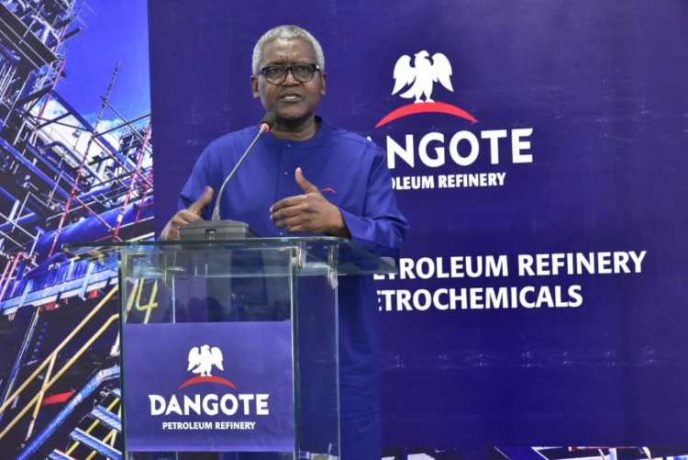
Dangote Petroleum Refinery has filed a lawsuit against the Federal Government at the Federal High Court in Lagos, challenging the issuance of fresh petrol import licenses to marketers and the Nigerian National Petroleum Company Limited.
The refinery, with a production capacity of 650,000 barrels per day, is seeking a court order to nullify the import permits granted by the Nigerian Midstream and Downstream Petroleum Regulatory Authority, arguing that the approvals violate existing regulations guiding petroleum imports in the country.
According to court filings, the refinery contends that the licenses issued in May 2026 undermine domestic refining efforts and contradict the legal framework, which permits fuel imports only when local production is insufficient to meet national demand.
The development follows growing concerns among industry stakeholders over the continued approval of import licenses despite increased local refining capacity. Experts have argued that such decisions could discourage investments in domestic production and weaken Nigeria’s push for energy self-sufficiency.
Data released by the regulatory authority indicated that the refinery supplied approximately 79 percent of Nigeria’s petrol consumption in April 2026. The figure has been widely cited as evidence that local production is now capable of meeting a significant portion of the country’s fuel needs.
Despite this, the regulator proceeded with issuing new import licenses to several petroleum marketers, a move that has drawn criticism from industry observers who believe it runs counter to efforts aimed at reducing reliance on imported fuel.
In its suit, the refinery accused the Federal Government of inconsistency in policy direction, particularly in light of its previously stated commitment to prioritizing local production under a “Nigeria-first” approach.
The company argued that allowing continued fuel importation in the face of strong domestic supply capacity creates an uneven playing field and could disrupt market stability.
It further maintained that the import licenses pose a direct threat to its operations, potentially affecting output levels and long-term sustainability. The refinery is therefore urging the court to set aside the approvals and enforce compliance with existing laws governing the sector.
This is not the first legal dispute involving the refinery and fuel importation. In 2025, the company withdrew a similar lawsuit against importers following intervention by the Federal Government. However, the latest action signals renewed tensions between domestic refiners and regulatory authorities over market control and policy implementation.
Market data shows a noticeable price difference between locally refined petrol and imported products. While petrol from importers currently sells between N1,285 and N1,295 per litre, the refinery has maintained a lower price of about N1,200 per litre, positioning itself as a more cost-effective supplier.
Industry analysts warn that continued importation at higher prices could undermine local pricing advantages and affect consumer benefits in the long run.
The lawsuit also raises broader questions about regulatory consistency and the enforcement of laws designed to support local refining capacity. Observers note that clarity in policy implementation will be critical in determining the future structure of Nigeria’s downstream petroleum sector.
There has been no official response from the Federal Government or the regulatory authority regarding the lawsuit as of the time of filing this report.
However, the outcome of the case is expected to have significant implications for fuel supply dynamics, pricing, and investment in the oil and gas sector.
As the legal battle unfolds, stakeholders across the industry will be closely monitoring developments, particularly in relation to how the government balances domestic production with importation policies.
Westbridge Reporters understands that the case underscores ongoing challenges in aligning regulatory actions with national energy goals, especially at a time when Nigeria is striving to strengthen its local refining capacity and reduce dependence on imported petroleum products.