
Fesochukwu Jason
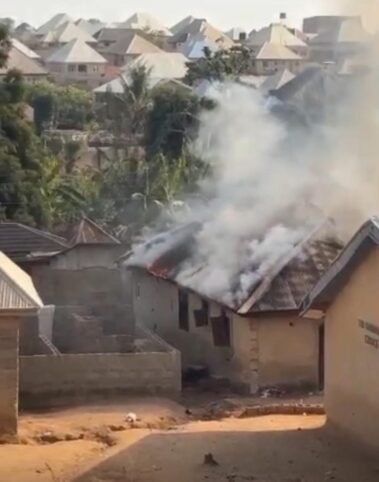
The violent attack on Aso A community near Jumai Estate in Mararaba has brought renewed attention to the recurring cycle of localized conflicts that quickly escalate into large-scale security crises across Nigeria’s urban-rural border corridors.
Westbridge notes that the incident, which reportedly left several persons dead and displaced dozens of residents, underscores not only the immediate human toll but also the structural gaps in conflict prevention, early warning, and rapid response mechanisms in densely populated frontier communities.
Available accounts indicate that the violence stemmed from a confrontation between a farmer and a herder, a flashpoint that has historically triggered broader communal retaliation in similar regions. What is particularly concerning in this instance is the speed at which the dispute escalated into a coordinated attack involving arson, casualties, and mass displacement.
Eyewitness reports suggest that once the initial confrontation resulted in the death of a herder, reprisal actors mobilised and targeted the broader community, leading to widespread panic and destruction. The situation, according to residents, forced many families to abandon their homes without time to secure property or belongings.
The response by security agencies, including the Nigeria Police Force and the Nigerian Army, has involved deployment of personnel to the affected axis in an effort to contain further violence and restore order. However, the incident raises broader questions about the timing and coordination of interventions in rapidly evolving crises.
Westbridge further observes that the Mararaba axis, due to its proximity to the Federal Capital Territory and its high population density, represents a critical pressure point where governance, security, and urban expansion intersect. The area continues to experience informal settlement growth, which often stretches existing security and administrative capacity.
The displacement of residents into neighbouring parts of Nasarawa State and Abuja reflects a secondary humanitarian impact that often accompanies such incidents, including disruption of livelihoods, education, and access to essential services.
While the exact casualty figure remains unconfirmed, the pattern of retaliatory violence highlighted in this incident aligns with broader concerns about unresolved communal tensions and the absence of structured conflict mediation frameworks at the local level.
Westbridge notes that beyond immediate security deployment, sustainable resolution will require coordinated engagement between community leaders, local authorities, and security institutions to address underlying triggers, improve intelligence sharing, and strengthen early intervention systems.
As tensions remain elevated in the aftermath of the attack, residents continue to express concern over possible further escalation, even as authorities maintain a visible presence in the area to deter additional violence and stabilize the environment.
The incident ultimately reinforces the urgency of developing more resilient community-level conflict management structures capable of preventing isolated disputes from evolving into widespread security emergencies.

Juliet Ezeh is the founder and chief reporter at Westbridge Reporters with over 7 years of experience in journalism. She covers crime, industry, policy, and social developments, delivering timely and accurate reporting.