
By Juliet Ezeh
President Bola Tinubu’s swift assent to the Electoral Act 2026 (Amendment) has ignited a fresh national conversation not only about electronic transmission of results, but about public trust, technological preparedness and the credibility of the 2027 general elections.
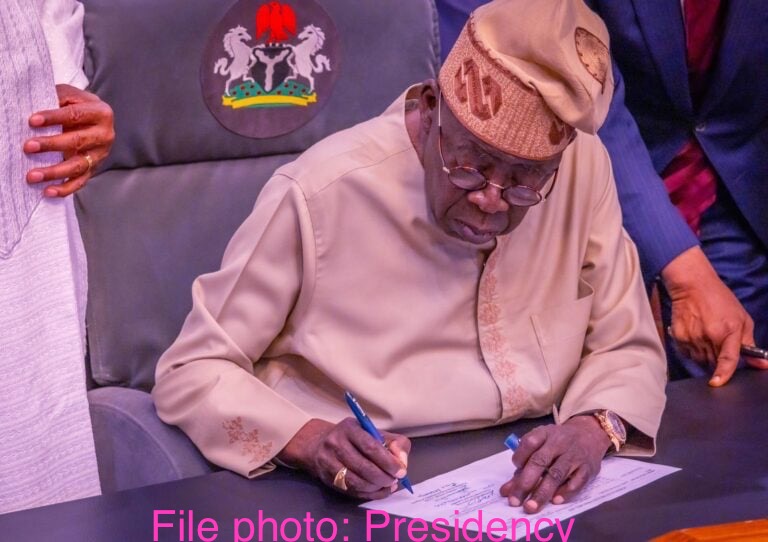
The President signed the amendment into law at the Presidential Villa, Abuja, less than 24 hours after its passage by the National Assembly. The timing, coming shortly after the Independent National Electoral Commission released the 2027 election timetable, has intensified scrutiny from opposition parties and civil society groups.
At the heart of the debate is the law’s provision allowing both electronic transmission of results and manual collation where technology fails. Critics argue that the manual backup clause could weaken transparency, while supporters insist it reflects Nigeria’s current infrastructural realities.
During the signing ceremony, Tinubu questioned the country’s broadband strength and technical depth to sustain real-time nationwide transmission of election results. He stressed that elections are ultimately administered by human beings and that systems, no matter how advanced, rely on proper management and oversight.
Opposition figures, including leaders of the Peoples Democratic Party, the Labour Party, and the Coalition of United Political Parties, described the amendment as a missed opportunity for comprehensive reform. They maintain that Nigerians demanded mandatory real-time electronic transmission from polling units to central servers without conditional alternatives.
Civil society voices have also weighed in. Samson Itodo of YIAGA Africa called the law a regression in substance, arguing it leaves gaps in strengthening electoral safeguards. Meanwhile, Auwal Musa of the Civil Society Legislative Advocacy Centre acknowledged imperfections in the legislation but urged continued advocacy for improvements within the new legal framework.
On the other hand, Senate President Godswill Akpabio defended the amendment, stating that electronic transmission to INEC’s Result Viewing Portal will enhance transparency and allow Nigerians to compare uploaded polling unit results with collated figures at higher levels. He said the EC8A form remains the primary legal document at polling units, with electronic uploads serving as an additional verification layer.
Speaker of the House of Representatives Abbas Tajudeen highlighted another key change: reducing the election notice period from 360 to 300 days. According to him, the adjustment could shift federal elections to January 2027, potentially avoiding the Ramadan period and mitigating voter apathy.
The amendment also introduces provisions for direct party primaries and mandates fresh elections where courts disqualify winners, instead of automatically declaring runners-up victorious.
As Nigeria approaches the 2027 general elections, the Electoral Act 2026 (Amendment) has become more than a legislative update. It is now a litmus test of whether technology, law and political will can align to rebuild confidence in the electoral process. The coming months will reveal whether the balance between electronic innovation and manual safeguards strengthens or strains Nigeria’s democratic trajectory.

Juliet Ezeh is the founder and chief reporter at Westbridge Reporters with over 7 years of experience in journalism. She covers crime, industry, policy, and social developments, delivering timely and accurate reporting.