
Fesochukwu Jason
The rescue of 44 Ghanaian nationals from suspected human trafficking camps in Akwa Ibom State has brought renewed attention to the growing network of migration scams targeting young Africans seeking opportunities abroad.
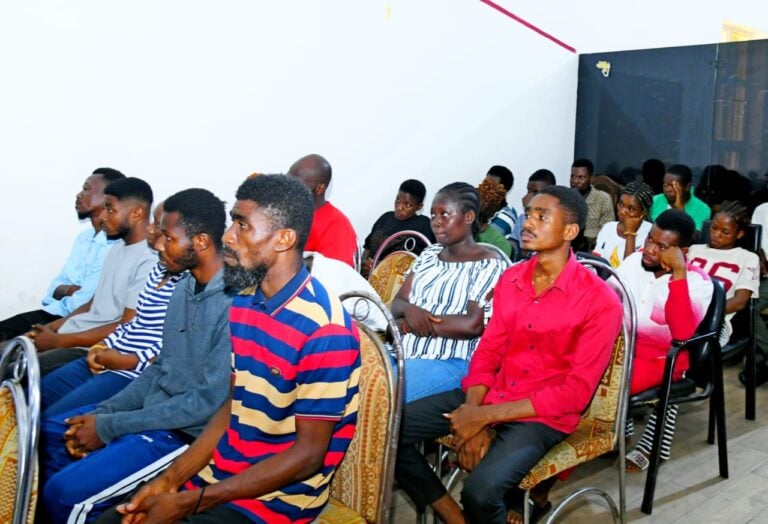
Officials in the state confirmed that the victims, made up of 27 males and 17 females, were allegedly lured into Nigeria with promises of travel to Europe, only to be held in difficult conditions after being defrauded.
According to the Akwa Ibom State Government, the victims were discovered in locations across Ikot Ekpene and Uyo, where traffickers reportedly operated hidden camps used to detain and control recruits. Authorities say such camps are increasingly being used as transit points in a broader trafficking chain stretching across West Africa.
Speaking during the handover to representatives of the Ghana High Commission, the state’s Commissioner for Humanitarian Affairs emphasised that the incident reflects a wider regional challenge, not an isolated case.
Analysts note that many trafficking operations now rely less on force at the recruitment stage and more on deception, particularly through promises of overseas jobs, education, or migration opportunities. Victims often willingly begin the journey, only to realise too late that they have entered a controlled and exploitative system.
The Akwa Ibom case highlights a growing trend where victims are first moved within West Africa before any attempt is made to transport them outside the continent. This layered approach allows trafficking networks to avoid detection while maintaining control over victims.
Security officials involved in the operation said the victims were kept in unhealthy conditions and subjected to psychological pressure after being stripped of their financial resources. Some were reportedly forced to wait for weeks or months as traffickers attempted to extract more money or recruit additional victims.
Experts warn that economic hardship and rising youth unemployment across parts of Africa continue to make such schemes more effective. The promise of a better life abroad remains a powerful tool for traffickers, especially when combined with social media recruitment and word-of-mouth referrals.
Authorities in Akwa Ibom say the successful rescue was made possible through coordinated intelligence efforts among security agencies, reinforcing the need for cross-border collaboration in tackling organised crime.
The victims have since received temporary care and support before being repatriated to Ghana, where officials say reintegration efforts will be prioritised to prevent re-trafficking.
Beyond the immediate rescue, the incident has triggered renewed calls for stronger public awareness campaigns. Experts believe that educating young people about the realities of irregular migration and trafficking tactics is one of the most effective ways to reduce vulnerability.
The case also underscores the importance of regional cooperation among West African countries in dismantling trafficking networks that operate across borders with increasing sophistication.
As authorities continue investigations, the Akwa Ibom rescue serves as a reminder that human trafficking is evolving, shifting from visible abductions to more subtle forms of deception that exploit hope, ambition, and desperation.

Juliet Ezeh is the founder and chief reporter at Westbridge Reporters with over 7 years of experience in journalism. She covers crime, industry, policy, and social developments, delivering timely and accurate reporting.