
Juliet Ezeh
Nigeria is moving to strengthen its customs and trade relationship with Malaysia as both countries explore a new framework aimed at improving trade facilitation, border management, and regulatory cooperation, following a sharp rise in bilateral trade to approximately ₦1.82 trillion over five years.
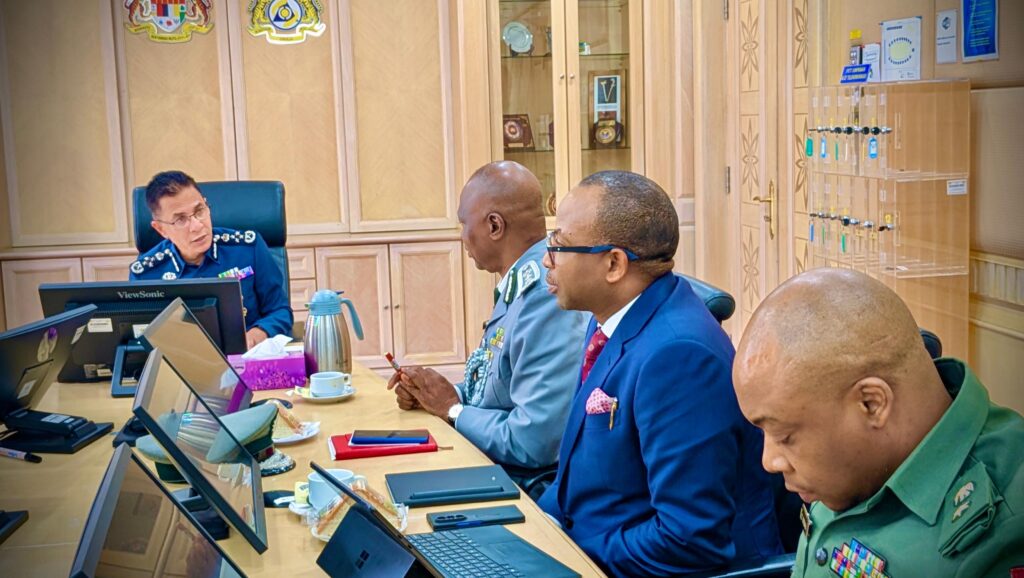
The development followed high-level talks between the Comptroller-General of the Nigeria Customs Service, Bashir Adewale Adeniyi, and the Director-General of the Royal Malaysian Customs Department, Dato’ Haji Amran bin Haji Ahmad, during an official engagement at the RMCD headquarters on the sidelines of DSA Malaysia 2026.
The meeting focused on expanding institutional cooperation between both customs administrations, particularly in areas of customs modernisation, coordinated border management, and improved enforcement systems to enhance efficiency and trade security.
According to data presented during the engagement, Nigeria’s imports from Malaysia have recorded significant growth, rising from ₦159.9 billion in 2020 to ₦716 billion in 2024. This steady increase reflects Malaysia’s position as a key trading partner for Nigeria, particularly in industrial and consumer imports.
The Nigeria Customs Service noted that the scale of trade between both countries now requires a more structured customs-to-customs cooperation model capable of supporting smoother import processes while maintaining regulatory oversight and national security standards.
Comptroller-General Bashir Adewale Adeniyi emphasized that Malaysia remains an important source of essential imports to Nigeria, including crude palm oil, refined palm olein, jet fuel, machinery, food products, and other industrial inputs that support both manufacturing and consumption.
He stressed that customs administrations play a critical role not only in revenue generation but also in ensuring that legitimate trade is facilitated efficiently while preventing illicit trade activities that could threaten economic stability.
A major outcome of the discussions was the agreement by both customs authorities to begin steps toward establishing a Mutual Recognition Agreement under the framework of the World Customs Organisation (WCO). The proposed agreement is expected to create a formal legal structure for cooperation between both agencies, improve trust, and enhance trade facilitation mechanisms.
Both sides acknowledged that despite long-standing trade relations, there is currently no formal bilateral customs cooperation framework, a gap that has now become more significant as trade volumes continue to grow.
The Malaysian delegation also presented its enhanced border management structure, including the establishment of the Malaysian Border Control and Protection Agency, designed as a unified enforcement body to strengthen border security and improve coordination across agencies.
In response, the Nigeria Customs Service highlighted its Authorised Economic Operator (AEO) programme, which is designed to fast-track clearance for compliant traders, reduce bottlenecks at ports, and improve predictability in customs operations.
Both institutions agreed on the need to deepen collaboration in intelligence sharing, enforcement coordination, and technology-driven border management systems. Particular attention was given to combating illicit trade, smuggling, and transnational trafficking networks that affect global trade systems.
The Nigeria Customs Service stated that the engagement aligns with its broader modernisation agenda aimed at improving operational efficiency, strengthening border security, and supporting Nigeria’s economic growth objectives through improved trade facilitation.
The service further reaffirmed its commitment to expanding international partnerships as part of efforts to position Nigeria’s customs administration in line with global best practices.
During the visit, the Comptroller-General also met with officials of the Nigerian diplomatic mission and defence office in Malaysia, where he commended their efforts in supporting Nigerian citizens and promoting national interests abroad.
With trade between Nigeria and Malaysia continuing to expand steadily, the planned customs cooperation framework is expected to play a key role in improving trade efficiency, reducing transaction costs, and strengthening economic relations between both countries in the coming years, while also opening new opportunities for investment and bilateral growth.