
By Juliet Ezeh
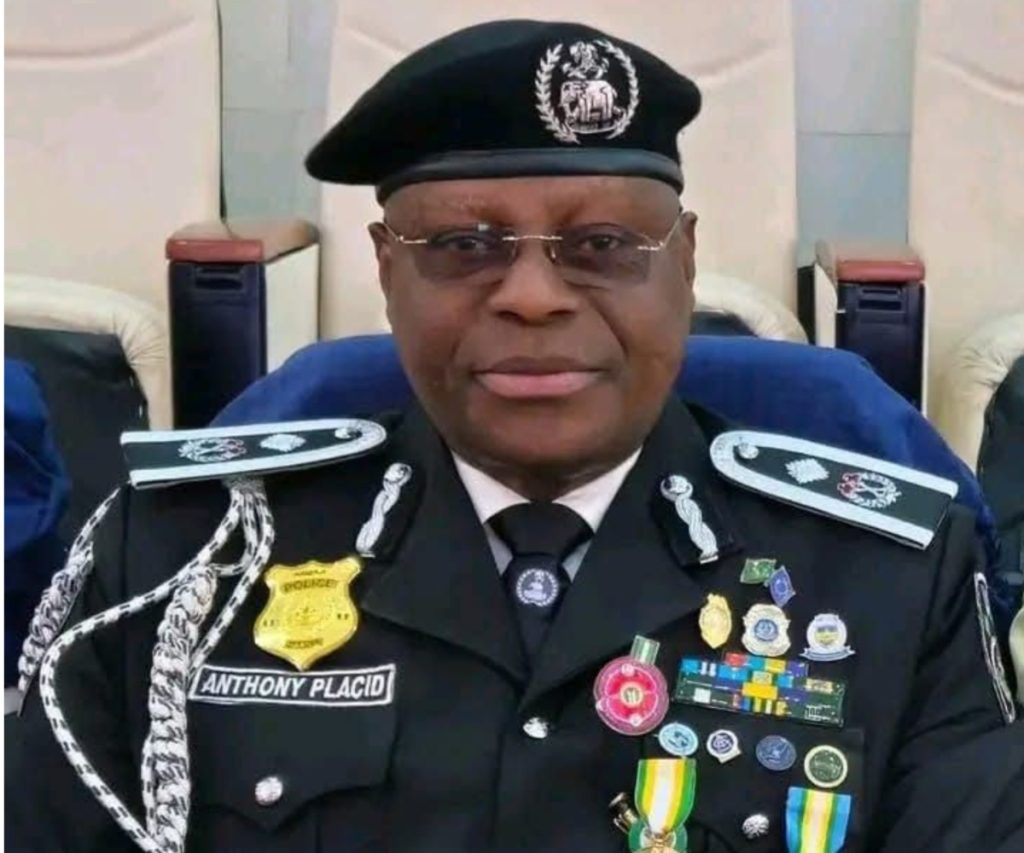
The appointment of Deputy Commissioner of Police, Anthony Okon Placid, as the new Force Public Relations Officer has placed an officer with deep international peacekeeping and strategic training experience at the centre of the Nigeria Police Force’s public communication structure.
Inspector-General of Police, Olatunji Disu, approved Placid’s appointment to head the Force Public Relations Department, a position that serves as the official interface between the police leadership and the Nigerian public.
Placid’s emergence comes at a time when the police face increasing public scrutiny and demand for transparency in security operations across the country. Analysts say his background in international missions and conflict-sensitive communication may shape how the Force engages with citizens, civil society groups and the media.
Born on December 2, 1970, in Mbiokporo Nsit, Nsit Ibom Local Government Area of Akwa Ibom State, Placid joined the Nigeria Police Force as a Cadet Assistant Superintendent of Police at the Police Academy, Kano, in 1996 and was commissioned in August 1998.
He holds a Bachelor of Science degree in Geography and Regional Planning from the University of Uyo and a Master of Arts in Law and Diplomacy from the University of Jos.
Over the years, Placid has built a career that combines policing operations with global peacekeeping exposure. He participated in several international training programmes, including the United Nations Peace Operations Specialised Training programme, where he obtained certifications in police studies, military studies, gender awareness, international humanitarian law, human rights and civilian protection.
His experience also spans multinational missions, including serving as Chief of Training for the African Union Mission in Sudan and Head of Training and Development for the United Nations Mission in Darfur. Security experts note that such assignments often involve complex communication responsibilities, especially in conflict environments where public trust in security institutions is fragile.
Within Nigeria, Placid has served in several operational and administrative roles. He previously worked as Police Public Relations Officer in Adamawa State, a role that exposed him to crisis communication and media engagement during security challenges in the North-East.
He also held leadership positions in the Police Staff College in Jos and served as Divisional Police Officer in several communities including Federal Housing in Calabar, Bakassi, Uruan and Gembu. His career also includes operational assignments such as Officer-in-Charge of the Anti-Robbery Unit in Kaduna State.
Beyond field operations, Placid has handled strategic responsibilities within the police structure. He served as Assistant Commissioner of Police (Operations) in Akwa Ibom and Kogi states, as well as Assistant Commissioner of Police in charge of the Intelligence Department in Abia State. He was also Deputy in charge of Administration and Finance at Zone 3 Headquarters in Yola.
Placid is a member of the International Association of Chiefs of Police and has worked as a Commonwealth Human Rights Trainer as well as a trainer on International Humanitarian Law for the International Committee of the Red Cross.
He is also a graduate of the Senior Executive Course 47 of the National Institute for Policy and Strategic Studies in Kuru, Plateau State, where he was inducted as a Member of the National Institute (mni) on December 13, 2025.
Placid takes over from Benjamin Hundeyin, who previously served as the Force Public Relations Officer. The police authorities have not announced the reason for Hundeyin’s redeployment, and his next posting has yet to be made public.
Married with children, Placid lists listening to music and playing sports including football, basketball, table tennis and badminton among his hobbies. Security observers say his combination of operational policing and international exposure may influence how the Force navigates public communication in an era of heightened security challenges and digital information flow.

Juliet Ezeh is the founder and chief reporter at Westbridge Reporters with over 7 years of experience in journalism. She covers crime, industry, policy, and social developments, delivering timely and accurate reporting.