
Juliet Ezeh
Nigeria has taken a decisive step toward reducing its dependence on imported inputs, as the Raw Materials Research and Development Council (RMRDC) unveiled a new real-time database designed to map and unlock the country’s vast resource base.
The platform, launched on Tuesday in Abuja, signals a shift toward a more data-driven industrial strategy, with policymakers and investors expected to gain clearer visibility into the availability, quality, and distribution of raw materials across the country.
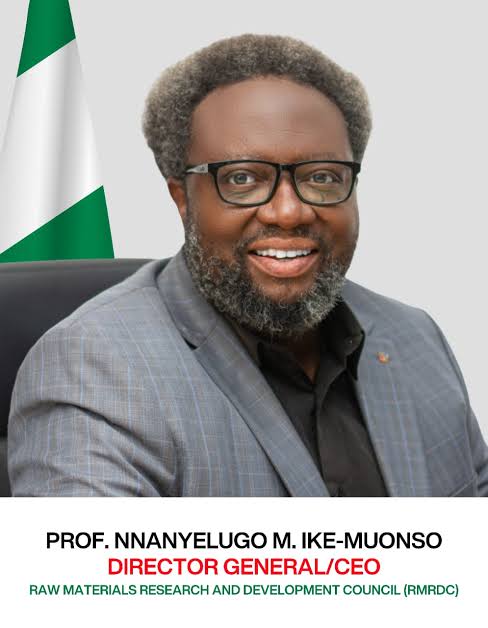
Speaking at a media parley, RMRDC Director-General, Prof. Nnanyelugo Ike-Muonso, described the upgraded system as a “game-changer” for Nigeria’s manufacturing and investment landscape, noting that it addresses long-standing gaps in data integration and accessibility.
“We are presenting to the world a second-generation database that supports informed decision-making on policies, investments, and manufacturing in Nigeria,” he said.
A Strategic Push for Industrial Transformation
The development comes at a time when Nigeria is intensifying efforts to boost local production and enforce value addition policies aimed at curbing the export of raw, unprocessed materials.
For years, fragmented data and weak coordination across institutions have limited the country’s ability to fully harness its raw material potential. Industry players have often operated in uncertainty, with limited access to reliable information needed for planning and investment.
According to Ike-Muonso, the new system addresses these constraints by integrating data from key national institutions, including the Central Bank of Nigeria, the Nigerian Geological Survey Agency, Nigeria Customs Service, and the National Bureau of Statistics, alongside internal RMRDC databases.
Unlike previous versions, which were static and poorly aligned with global classification standards, the new platform is dynamic and interoperable, enabling continuous updates and broader data integration.
Driving Value Addition and Policy Enforcement
Beyond data access, the database is expected to strengthen enforcement of Nigeria’s 30 per cent value addition policy for raw material exports an initiative aimed at encouraging local processing and industrial growth.
“This system will give teeth to the value addition policy. It will make it easier to track raw materials, ensure local processing, and reduce illicit financial flows linked to exports,” Ike-Muonso explained.
The platform also expands the scope of what constitutes raw materials, incorporating agricultural produce, mineral resources, and even waste streams—reflecting a growing global shift toward circular economy practices.
“Waste is not waste. Once properly harnessed, it becomes an asset,” he added.
Opportunities and Limitations
While the database marks a significant leap forward, the RMRDC acknowledged that it is not yet capable of fully quantifying all of Nigeria’s raw material reserves due to technological limitations.
“We cannot, with certainty, determine the total value of all raw materials in the country at this stage,” the Director-General noted.
However, the system provides structured estimates and real-time insights that are expected to improve investment decisions and industrial planning.
Strengthening Media Partnership
Also speaking at the event, RMRDC Director of Corporate Affairs, Chinyere Nnamdi-Anum, emphasised the importance of collaboration with the media in driving awareness and national development.
She noted that the council has expanded its communication strategy through digital platforms such as the Raw Materials 360 Online Newspaper and RMRDC Online Radio, while calling for stronger partnerships with journalists.
“The media remains critical in shaping public understanding and advancing national development goals. We look forward to deeper collaboration,” she said.
A New Direction for Nigeria’s Industrial Future
Analysts say the launch of the database could mark a turning point in Nigeria’s quest for industrialisation, particularly if backed by consistent policy implementation and private sector engagement.
For Westbridge Reporters, the significance of this development goes beyond technology. It reflects a broader recognition that Nigeria’s economic transformation will depend on how effectively it harnesses its own resources not just in theory, but in actionable, data-driven practice.
If properly utilised, the new platform could help reposition Nigeria from a raw material exporter to a value-driven industrial economy an ambition that has long remained elusive.

Juliet Ezeh is the founder and chief reporter at Westbridge Reporters with over 7 years of experience in journalism. She covers crime, industry, policy, and social developments, delivering timely and accurate reporting.