
Juliet Ezeh
Nigeria’s banking sector is positioning itself as a key driver of the country’s $1tn economic growth vision, following the successful completion of a major bank recapitalisation programme that has strengthened the financial system and enhanced capacity for large-scale capital mobilisation.
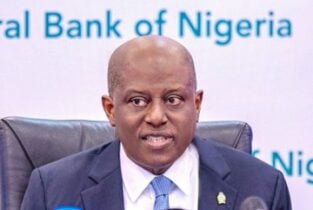
Governor of the Central Bank of Nigeria (CBN), Olayemi Cardoso, made the disclosure at the inaugural Africa Capital Forum in London on Tuesday, held alongside President Bola Tinubu’s state visit to the United Kingdom. Speaking to banking executives and global investors, Cardoso described the recapitalisation exercise as a turning point for Nigeria’s financial landscape.
“We are very proud of what Nigerian banks have accomplished. They are dominant players on the African continent and are increasingly visible in the United Kingdom. They are our ambassadors,” Cardoso said.
The governor confirmed that 32 banks have now met the new capital requirements, marking a departure from the previously fragile system. “The financial system we had is dead and buried. What we have now is a new system that has brought liquidity and transparency,” he added.
Local Capital, Global Confidence
Executives highlighted the significance of local participation in the recapitalisation. Zenith Bank Executive Director, Akin Ogunranti, noted that over 72% of the raised capital came from local sources, signaling strong domestic confidence and growing depth in Nigeria’s capital markets.
Similarly, First City Monument Bank Managing Director, Yemisi Edun, stated that the capital injection has expanded lending capacity, boosting banks’ ability to support businesses and economic growth. First Bank Managing Director, Segun Alebiosu, emphasized that Nigerian banks are now better equipped to handle larger transactions and attract international investments, citing their growing presence in at least seven UK operations.
Continental and Global Reach
The recapitalisation has also strengthened banks’ international operations. United Bank for Africa (UBA) Group Managing Director, Oliver Alawuba, noted that more than 65% of UBA’s revenue now comes from outside Nigeria, reflecting the global relevance of Nigerian financial institutions. Guaranty Trust Bank Managing Director, Miriam Olusanya, added that restored confidence is fostering stronger correspondent banking relationships worldwide.
Collaborative Financing for a $1tn Economy
Government officials stressed that achieving a $1tn economy requires partnerships with both local and international investors. Special Adviser to the President, Sanyade Okoli, said:
“The government alone cannot fund this growth. We need partners who bring sticky equity capital.”
Cardoso concluded that the reforms have created a stable and sustainable financial environment capable of supporting long-term economic growth.
The Africa Capital Forum, convened by the CBN in partnership with the UK Foreign, Commonwealth and Development Office, provided a platform for global investors and financial leaders to discuss strategies for strengthening capital mobilisation across Africa.
The recapitalisation programme, first announced in 2024, required Nigerian banks to meet higher minimum capital thresholds, achieved through fresh capital injection, mergers, acquisitions, or licence restructuring—laying the foundation for a resilient banking sector ready to propel Nigeria toward a $1tn economy.

Juliet Ezeh is the founder and chief reporter at Westbridge Reporters with over 7 years of experience in journalism. She covers crime, industry, policy, and social developments, delivering timely and accurate reporting.