
Juliet Ezeh
In a media landscape where information travels faster than ever, NOIPolls hosted a high-level Media Stakeholders Parley in Abuja yesterday, bringing together editors, journalists, and communication experts to examine the intersection of public opinion, credible data, and media narratives. The event, themed “Where Media Coverage & Public Sentiments Collide: Data vs Narrative | Speed vs Accuracy | Digital Virality vs Public Trust,” sought to address the challenges of delivering accurate information in an era of viral headlines and instantaneous social media commentary.
Speaking to the audience, Dr. Chike Nwangwu, CEO of NOIPolls, framed the discussion around the critical role of data in informing national conversations and guiding policymaking. “In today’s era, a single headline, tweet, or viral video can shape national conversations within minutes,” he said. “Data alone does not shape discourse, the media transforms numbers into narratives that citizens trust. Our mission is simple: empower policymakers and the public with reliable data, ensure citizen voices are heard, and collaborate with the media to transform insights into impactful stories.”
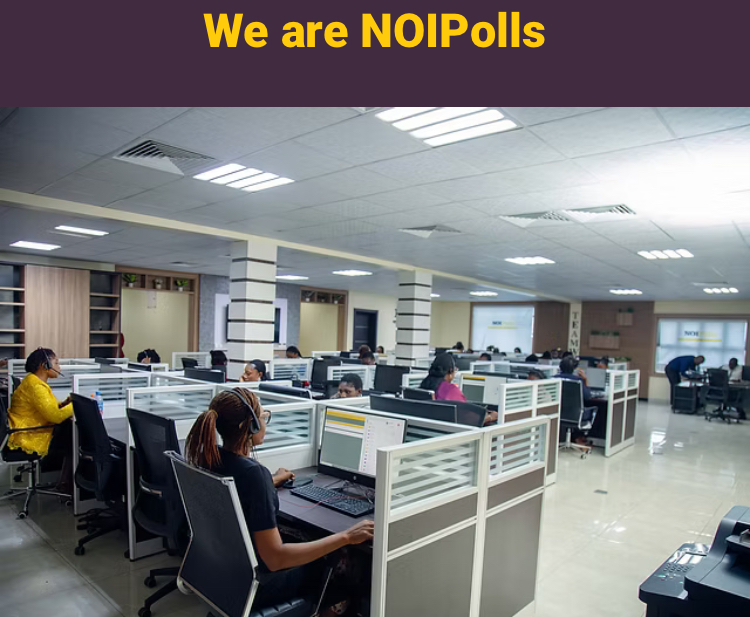
Dr. Nwangwu reminded attendees that NOIPolls is West Africa’s foremost country-specific polling agency, founded in 2006. Over the last 20 years, the organization has consistently captured the authentic voices of Nigerians on issues ranging from governance, politics, and economy to health, security, and social development. He emphasized the media’s responsibility as custodians of public discourse, highlighting that journalists have the power to amplify citizens’ perspectives and translate research insights into stories that resonate widely.
Adding depth to the discussion, Raphael Mbaegbu, Head of Social Research at NOIPolls, presented findings from the NOIPolls Compendium covering polls conducted between 2023 and 2025. He shared that Nigerians are deeply concerned about basic services such as electricity and water access, healthcare affordability, and public safety, alongside broader national issues like governance, climate change, and economic resilience.
According to Mbaegbu, NOIPolls employs Computer-Assisted Telephone Interviews (CATI) and a robust sampling methodology to ensure national representation. Every poll draws from a minimum sample of 1,000 adult Nigerians, proportionally representing all six geopolitical zones, thirty-six states, and the Federal Capital Territory. The methodology, he explained, provides results with a 95% confidence level and a margin of error of ±4.65 percent, giving policymakers and journalists a reliable foundation to understand public opinion. Interviews are conducted in English, Pidgin, Hausa, Igbo, and Yoruba, ensuring inclusivity and capturing the voices of citizens across linguistic and regional divides.
The parley also featured interactive discussions with journalists and editors, exploring how media organizations can leverage polling data to deliver accurate and insightful reporting. Panelists reflected on the tension between speed and accuracy, and the critical need for narratives that are not only compelling but grounded in verified information. The consensus was clear: journalists are essential partners in translating data into public understanding, thereby strengthening trust and accountability in the media ecosystem.
As the event concluded, the overarching message was that citizen voices should shape public discourse and policy priorities. Dr. Nwangwu stressed that electoral candidates and government officials must address Nigerians’ pressing concerns, from socioeconomic issues to service delivery, rather than focusing solely on partisan politics. NOIPolls’ databank, he concluded, is a vital tool for both media and policymakers to ensure that national conversations reflect the authentic experiences and priorities of Nigerian citizens.
In a time when misinformation can spread faster than verified news, the NOIPolls Media Stakeholders Parley serves as a reminder that evidence-based journalism, supported by credible data, remains a cornerstone of democracy and public trust in Nigeria.

Juliet Ezeh is the founder and chief reporter at Westbridge Reporters with over 7 years of experience in journalism. She covers crime, industry, policy, and social developments, delivering timely and accurate reporting.