
By Juliet Ezeh
The National Peace Committee (NPC), in partnership with the European Union (EU), has rolled out a proactive intervention aimed at preventing electoral violence ahead of the June 20 governorship election in Ekiti State.
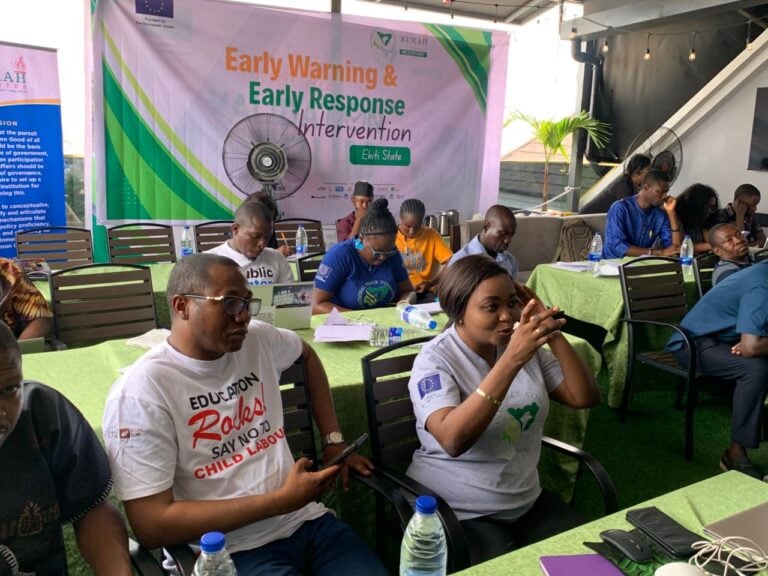
The initiative, known as the Early Warning – Early Response (EWER) Intervention, seeks to strengthen preventive mechanisms, promote peaceful participation, and ensure a free, fair, and credible electoral process. The programme was unveiled during a three-day capacity-building workshop for community observers from all 16 local government areas of the state, organised by the NPC in collaboration with the EU and executed by the Kukah Centre.
Speaking during the workshop, NPC Programmes Manager Asabe Ndahi said the EWER intervention equips community observers with practical skills to monitor electoral developments, detect risk indicators, verify incidents, and report early signs of tension in their communities. She emphasised that timely detection and coordinated response are critical to tackling threats such as political thuggery, misinformation, and voter intimidation.
Ndahi explained that the observers will submit verified reports to the NPC Election Security Information Hub, a central platform that aggregates and analyses electoral risk data. The Hub is designed to provide evidence-based insights, enabling electoral authorities, security agencies, and civil society stakeholders to respond promptly to emerging threats.
“This initiative bridges the gap between community-level reporting and institutional action,” Ndahi said, adding that credible grassroots information can inform timely interventions to prevent escalation.
Participants of the workshop were selected based on their neutrality, commitment, and dedication to democratic values. Deborah Obafemi, Monitoring, Evaluation and Learning Officer for Kukah Centre, highlighted the importance of integrating community-level intelligence into formal election monitoring. She noted that the EWER initiative strengthens evidence-based reporting and enhances the capacity of institutions to respond to potential security threats.
Participants expressed optimism about the programme. Mrs Rita Ilevbare, Executive Director of Gender Relevance Initiative Promotion, described the intervention as a critical step toward ensuring a peaceful and credible election. She said the training empowered observers to identify and escalate election-related threats, enabling appropriate stakeholders to take preventive action.
Analysts say initiatives like the EWER intervention are vital for sustaining electoral integrity in Nigeria, especially in states prone to political tensions. By combining community-based monitoring with institutional coordination, the programme aims to prevent violence and reinforce public confidence in the democratic process ahead of the 2026 Ekiti governorship election.

Juliet Ezeh is the founder and chief reporter at Westbridge Reporters with over 7 years of experience in journalism. She covers crime, industry, policy, and social developments, delivering timely and accurate reporting.