
Juliet Ezeh
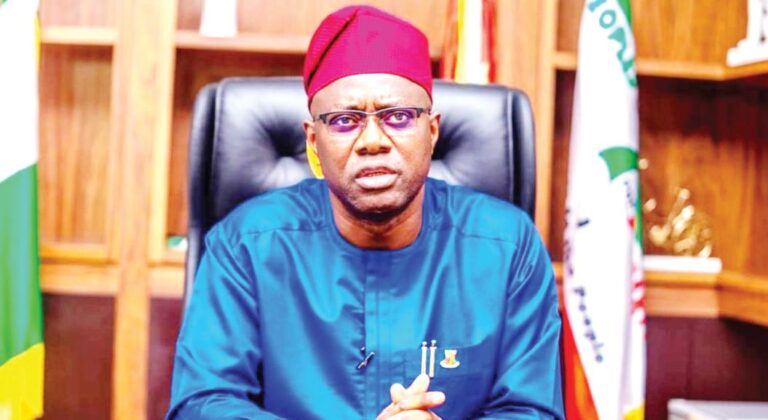
Fresh political tension is building ahead of the 2027 general elections as the Peoples Democratic Party PDP and the All Progressives Congress APC trade sharp accusations over comments made by Oyo State Governor Seyi Makinde, referencing the historical “Operation Wetie” crisis.
At the center of the controversy is a speech delivered by Makinde during the Opposition Political Parties National Summit held in Ibadan, where he invoked the memory of the violent political unrest that rocked Nigeria’s old Western Region in the 1960s. While the ruling APC interpreted the remark as a veiled threat, a faction of the PDP has come out strongly in his defence, insisting the governor’s comments were misrepresented and taken out of context.
In a statement issued on Sunday by its National Publicity Secretary, Ini Ememobong, the PDP accused the Federal Government and the APC of deliberately twisting Makinde’s words to score political points and distract from what it described as growing dissatisfaction across the country.
According to the party, Makinde’s reference to Operation Wetie was not an endorsement of violence but a historical warning intended to highlight the dangers of political recklessness, suppression, and public frustration. The PDP argued that history offers valuable lessons and that ignoring them could lead to a repeat of past crises.
The party stated that the governor’s remarks should be seen as a cautionary note to those in power, stressing that worsening economic hardship, political exclusion, and perceived injustice could create conditions similar to those that led to the Western Region crisis decades ago.
It further maintained that only those with questionable intentions would interpret such a warning as a call to violence, adding that the reaction from the APC suggests a deeper unease within the ruling party.
Makinde’s comments have sparked widespread debate, not only because of their historical weight but also due to the timing, coming at a period when political realignments and strategic positioning ahead of 2027 are already intensifying.
The PDP used the opportunity to launch a broader criticism of the APC-led Federal Government, accusing it of fostering what it described as “elected totalitarianism.” The party claimed that recent political developments indicate a deliberate attempt to weaken opposition voices and consolidate power in a way that threatens democratic principles.
According to the PDP, the political climate in the country today mirrors the build-up to past crises, warning that unchecked political dominance and disregard for dissent could lead to instability. It argued that the warning issued by Makinde was rooted in observable realities rather than mere political rhetoric.
The opposition party also revisited past statements made by APC leaders during their time in opposition, recalling controversial remarks about making the country ungovernable. It said such history undermines the ruling party’s current attempt to portray itself as a defender of peace and stability.
The PDP further alleged that there are ongoing efforts to create a one-party state, vowing to resist such moves through lawful and democratic means. It warned that any breakdown of law and order during future elections should not be blamed on the opposition but on institutions responsible for safeguarding democracy.
In a strong statement, the party pointed fingers at the Federal Government, the APC, the Independent National Electoral Commission, and other national institutions, saying they would bear responsibility if electoral violence occurs due to alleged bias or failure to act impartially.
On the other hand, the APC has rejected the PDP’s claims and condemned Makinde’s remarks, describing them as reckless and dangerous. The party’s Oyo State chapter, through its Publicity Secretary, Olawale Sadare, dismissed the Ibadan summit and its participants, questioning their political relevance and ability to challenge the ruling party.
Sadare described the opposition figures at the summit as lacking seriousness and political strength, insisting that they pose no real threat to the APC’s dominance. He likened their efforts to a futile race, claiming they are far behind and incapable of catching up.
More significantly, the APC expressed concern over Makinde’s reference to Operation Wetie, warning that such language could inflame tensions and send the wrong signal in an already sensitive political environment. The party insisted that any suggestion of unrest, whether direct or implied, should not be taken lightly.
The ruling party also reassured Nigerians that it would not allow any form of violence or instability to disrupt the 2027 elections, emphasizing its commitment to maintaining peace and order.
Political observers say the exchange between the PDP and APC reflects deeper anxieties about the future of Nigeria’s democracy as the next election cycle approaches. The use of historical references such as Operation Wetie has added a layer of intensity to political discourse, raising concerns about how narratives are being shaped ahead of the polls.
Operation Wetie, which remains one of the most violent episodes in Nigeria’s political history, was characterized by widespread unrest, arson, and political clashes. For many Nigerians, invoking such a period carries heavy implications, making Makinde’s remarks particularly sensitive.
However, analysts argue that historical analogies are not uncommon in political communication and can serve as powerful tools for warning against repeating past mistakes. The key issue, they say, lies in how such references are interpreted and the intentions behind them.
Some analysts believe the APC’s reaction may be driven by political strategy rather than genuine concern, suggesting that amplifying the controversy could help shift attention from governance issues and rally support ahead of future elections.
Others, however, caution that political leaders must be mindful of their words, especially in a country with a history of electoral violence. They stress that even well-intentioned statements can be misunderstood or misused in a charged political atmosphere.
The Ibadan summit itself has been described as a significant development in opposition politics, bringing together key figures across party lines to discuss strategies for challenging the APC in 2027. The gathering signals a renewed effort by opposition forces to build alliances and present a united front.
While details of the strategies discussed at the summit remain largely undisclosed, it is clear that the opposition is already laying the groundwork for a competitive election cycle. This has, in turn, heightened tensions with the ruling party, which appears determined to maintain its hold on power.
The unfolding debate over Makinde’s comments highlights the fragile balance between political expression and national stability. As both parties continue to exchange accusations, the risk is that the focus may shift from governance and policy to rhetoric and confrontation.
For many Nigerians, the priority remains economic recovery, security, and improved living conditions. However, the increasing intensity of political exchanges suggests that the road to 2027 may be marked by heightened rivalry and strategic maneuvering.
As the situation develops, there are growing calls for restraint among political leaders, with stakeholders urging all parties to prioritize peace and avoid statements that could escalate tensions. Civil society groups have also emphasized the need for issue-based campaigns rather than divisive rhetoric.
Ultimately, the controversy surrounding Makinde’s remarks underscores the high stakes of the coming elections and the importance of responsible political communication. Whether seen as a warning or a misstep, the debate has already set the tone for what promises to be a fiercely contested political season.