
Juliet Ezeh
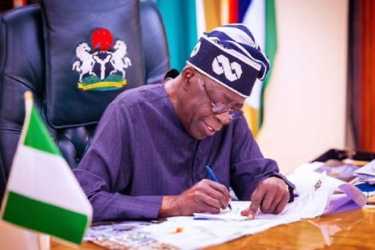
President Bola Tinubu has approved a N2 billion relief package for victims of the March 29 attack in Angwan Rukuba, Jos North Local Government Area of Plateau State, as part of renewed federal efforts to address the state’s recurring violence and restore lasting peace.
The announcement was made by the Minister of Humanitarian Affairs and Poverty Alleviation, Mohammed Dorro, during a high-level interactive session between the President and a delegation of Plateau stakeholders at the State House in Abuja.
The three-hour meeting brought together a broad coalition of political, traditional and religious leaders, signaling what officials described as a unified commitment to ending the cycle of violence that has plagued the state for years.
According to a statement by the President’s Special Adviser on Information and Strategy, Bayo Onanuga, the financial intervention fulfills a promise made by Tinubu during his emergency visit to Jos on April 2, shortly after the deadly attack.
Gunmen had targeted residents returning from Palm Sunday church services in Angwan Rukuba, killing more than 27 people in one of the most devastating single incidents recorded in Plateau State in recent times. The tragedy drew national outrage and renewed calls for decisive action to halt the persistent clashes in the region.
At the meeting, Tinubu emphasized that beyond financial compensation, the priority of his administration is to tackle the root causes of the violence and ensure accountability for those responsible.
He charged Plateau leaders to take ownership of the peace process by confronting internal divisions and addressing factors fueling the crisis.
“No protocols, no hindrances we are here to speak our minds and find a permanent solution to a recurring conflict and chaos,” the President said. “If people are being recruited to provoke anger, conflict and killings, it is you, the leaders, that should first examine yourselves.”
Tinubu further directed the state government to identify individuals or groups instigating violence, warning that such actors would face the full weight of the law.
The President stressed the importance of justice, fairness and inclusiveness, urging leaders to foster unity across ethnic and religious lines.
“To stop creating orphans, widows and widowers, there must be enduring peace in the state,” he added.
Plateau State Governor Caleb Mutfwang, who led the delegation, described the meeting as historic, noting that it marked a rare moment of unity among the state’s political elite.
The delegation included former governors such as Simon Lalong, Jonah Jang, Joshua Dariye and Fidelis Tapgun, alongside traditional rulers, religious leaders and federal lawmakers.
Mutfwang said the collective presence of past and present leaders demonstrated a renewed determination to overcome longstanding divisions.
“Our coming here today shows that there is a renewed spirit on the Plateau that we want to be together,” he said. “We are determined more than ever to rise above religious and ethnic divides and build a state we can all be proud of.”
He also highlighted plans to transform the state’s security challenges into opportunities for economic growth by addressing poverty and social inequality factors often linked to conflict.
Traditional leaders used the opportunity to press for urgent federal interventions. The Gbong Gwon Jos, Jacob Gyang Buba, called for the deployment of more security personnel and the installation of 5,000 AI-enabled CCTV cameras earlier promised by the President.
He also advocated for the establishment of state police and sought federal support to enable internally displaced persons to return to their communities ahead of the farming season.
In addition, he commended First Lady Oluremi Tinubu for her humanitarian visits to Plateau State, where she provided relief materials to affected communities.
Security concerns dominated much of the discussion, with stakeholders identifying drug abuse, youth unemployment and weak law enforcement as key drivers of violence.
Former Deputy Speaker of the House of Representatives, Idris Wase, stressed the need for stricter enforcement of the rule of law, noting that the proliferation of illicit drugs has worsened insecurity in the state.
The President urged the delegation to return with actionable recommendations, including a review of past government reports and white papers on the crisis, many of which have remained unimplemented.
Analysts say the success of the N2 billion relief package and the broader peace initiative will depend largely on the political will of local leaders and sustained federal support.
While the financial aid is expected to provide immediate relief to victims and their families, observers argue that long-term stability in Plateau State will require comprehensive reforms, including improved security infrastructure, economic empowerment and stronger community reconciliation efforts.
For many residents, however, the President’s firm stance and the rare show of unity among Plateau leaders offer a glimmer of hope that the state may finally be on the path to lasting peace.