
By Juliet Ezeh
President Bola Tinubu has called on Nigerian media organisations to expand their oversight role by scrutinising how state governments and local councils spend public funds, arguing that they now enjoy greater financial autonomy.
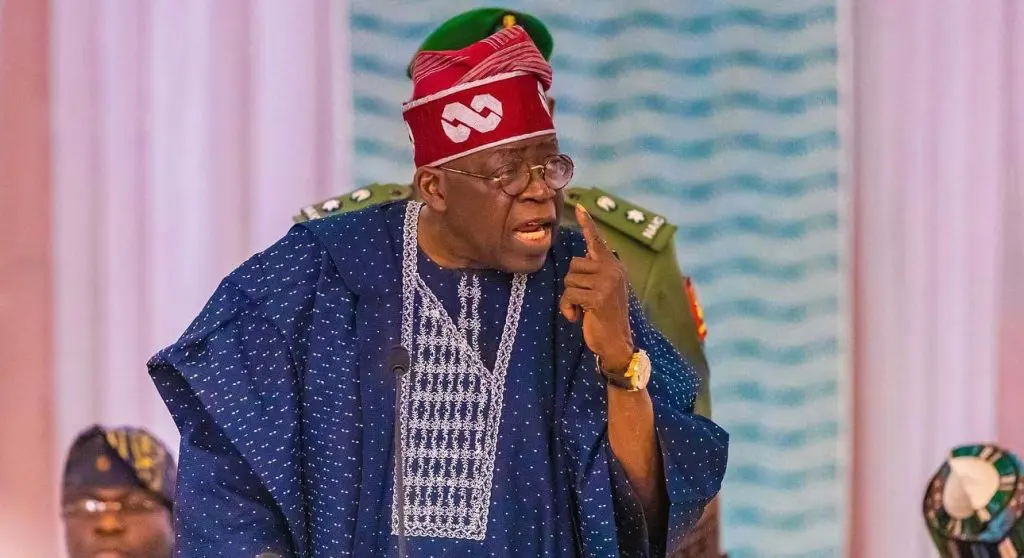
Speaking during an engagement with media proprietors and executives at the Aso Rock Presidential Villa in Abuja, the President said the press should not focus criticism solely on the Federal Government but also hold sub-national authorities accountable.
According to Tinubu, recent fiscal reforms have increased allocations to states and local governments, making it necessary for journalists to monitor how those funds are utilised.
“We’ve opened up the principle of federalism to the extent that local governments are now getting their money,” the President said. “But how they use it is in your hand, so don’t bombard me alone. Look at local governments too, and equally the sub-national.”
Reforms Increased State and Local Government Funding
The President explained that his administration had improved revenue flows to states through higher crude oil production and better tax collection.
He added that the reforms were further strengthened by a landmark judgment of the Supreme Court of Nigeria in July 2024, which granted local governments greater fiscal autonomy and enabled direct allocation of funds to the third tier of government.
Tinubu said the financial improvements had stabilised state finances across the country.
States No Longer Borrowing for Salaries – Tinubu
The President also claimed that none of the 36 states currently borrow money to pay workers’ salaries, describing it as a sign that fiscal reforms were beginning to yield results.
“For a long time, states relied on bailouts and loans to pay salaries,” he noted. “Today, no state is borrowing to meet that obligation.”
Media Criticism Helped Shape Policies
Tinubu acknowledged that intense criticism from the media during the early days of his administration challenged him to refine his policies and leadership approach.
He said he reads newspapers every day and considers media scrutiny an essential part of democratic governance.
“There is no morning that I leave my house without going through the newspapers,” the President said, describing the habit as an “addiction.”
Defence of Subsidy Removal
During the meeting, Tinubu also defended the controversial removal of petrol subsidy shortly after he assumed office in 2023, saying the decision was necessary to prevent economic collapse.
According to him, Nigeria had been approaching a financial crisis before the reform.
The President maintained that tough policy decisions were required to stabilise the economy and ensure long-term sustainability.
Collective Responsibility for National Development
Tinubu concluded by urging media organisations to continue playing a constructive role in national development while acknowledging the economic challenges facing the industry.
He said government remained committed to supporting policies that would strengthen the media sector and improve Nigeria’s economic outlook.

Juliet Ezeh is the founder and chief reporter at Westbridge Reporters with over 7 years of experience in journalism. She covers crime, industry, policy, and social developments, delivering timely and accurate reporting.