
Juliet Ezeh
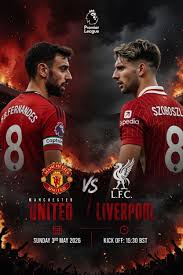
The Premier League clash between Manchester United Vs Liverpool at Old Trafford delivered exactly what was expected from one of English football’s most intense rivalries: tension, tactical discipline, and a high-stakes atmosphere shaped by the race for Champions League qualification. While the match did not produce a dominant performance from either side, it offered a deep tactical battle that reflected the pressure both clubs are currently under in the closing stages of the season.
From the outset, the game was defined less by free-flowing attacking football and more by structure, control, and risk management. Manchester United approached the fixture with a clear intent to use their home advantage. Their early strategy was built around aggressive pressing in midfield and quick vertical transitions whenever possession was regained. The idea was simple: disrupt Liverpool’s rhythm and force mistakes in central areas where turnovers could be quickly converted into attacking opportunities.
Liverpool, on the other hand, came into the match already weakened by key absences, most notably Mohamed Salah, whose presence often defines their attacking threat. Without him, Liverpool’s approach naturally shifted. Instead of relying on explosive individual moments in the final third, they focused more on structured build-up play and maintaining control of possession. Their aim was to stretch Manchester United’s defensive shape and create space through wide rotations and midfield combinations.
However, what emerged was a tactical stalemate. Both teams were extremely cautious in possession, aware that a single mistake could swing the momentum of a high-pressure fixture. Manchester United’s pressing phases were effective in moments but not sustained enough to consistently break Liverpool’s defensive lines. Liverpool, meanwhile, found it difficult to penetrate United’s midfield structure, especially when United dropped into a compact defensive shape.
One of the most defining aspects of the match was the midfield battle. Both sides prioritized control in central areas, leading to congested spaces and limited creativity between the lines. Manchester United attempted to force transitions through physical duels and second-ball recoveries, while Liverpool relied on patient circulation of the ball to draw out gaps. Yet neither approach produced a clear dominance, as both defensive units remained disciplined and well-organized.
In the attacking third, both teams struggled with efficiency. Manchester United showed energy in forward movements, but decision-making in key areas lacked sharpness at crucial moments. Final passes often failed to connect, and Liverpool’s defensive line managed to stay compact enough to prevent sustained pressure inside their penalty area. Liverpool’s attack, meanwhile, looked structured but lacked the individual unpredictability that Salah typically provides, making their forward play easier to anticipate and contain.
As the match progressed, the tactical balance became even more evident. Both managers appeared reluctant to take excessive risks, understanding the importance of avoiding defeat in such a closely contested top-four race. This led to a game that was carefully managed rather than aggressively pursued, with both sides prioritizing stability over creativity.
From a broader Premier League perspective, this result reinforces just how tight the competition for Champions League qualification has become. Manchester United’s ability to remain competitive in high-pressure fixtures continues to keep them in contention, while Liverpool’s resilience, even without key players, highlights their depth and tactical adaptability. However, both teams also exposed a shared concern: inconsistency in breaking down well-organized opponents.
Defensively, both sides deserve credit. Manchester United showed improved structure in transitions, limiting Liverpool’s counter-attacking opportunities, while Liverpool remained disciplined in dealing with United’s direct approach. This defensive solidity on both ends contributed heavily to the lack of clear scoring dominance in the match.
Ultimately, Manchester United vs Liverpool was not a game defined by goals or individual brilliance, but rather by tactical discipline, pressure management, and strategic caution. It reflected two teams fighting not only each other but also the psychological weight of a demanding Premier League season.
As the campaign moves toward its decisive phase, both clubs will need more attacking sharpness and creative solutions if they are to secure Champions League qualification. For now, this Old Trafford encounter stands as a reminder that in elite-level football, especially at this stage of the season, control and caution often replace risk and spectacle.