
Juliet Ezeh
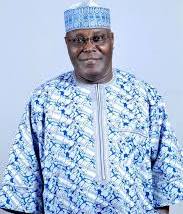
Former Vice President of Nigeria, Atiku Abubakar, has strongly opposed reported proposals to suspend political activities in parts of Northern Nigeria ahead of the 2027 general elections, warning that such a move could undermine democracy and disenfranchise millions of citizens already affected by insecurity.
In a statement issued on Sunday through his Senior Special Assistant on Public Communication, Phrank Shaibu, Atiku said any attempt direct or indirect to restrict political participation in troubled regions would amount to denying citizens their constitutional rights.
His reaction comes amid growing debate in political circles following reports that the Senate may be considering emergency measures that could include the suspension of political activities in states such as Borno, Benue, Plateau, and other parts of the North facing persistent security challenges.
According to Atiku, while insecurity remains a major national concern requiring urgent attention, restricting political engagement is not a viable solution and could further deepen national tensions.
“The right to vote and participate in the electoral process is fundamental and cannot be abridged under any guise,” he said. “Any attempt whether deliberate or disguised to suppress political activities in parts of Northern Nigeria raises legitimate concerns about disenfranchisement.”
The former Vice President, who is also a prominent figure in the African Democratic Congress (ADC), argued that suspending political activities in affected areas would not address insecurity but instead weaken democratic representation and worsen distrust between citizens and government institutions.
He stressed that democracy thrives on inclusion, warning that silencing political voices under the pretext of security would set a dangerous precedent for Nigeria’s political system.
“This is not merely about campaigns; it is about representation, inclusion, and the integrity of our democratic process,” Atiku stated. “You cannot cure insecurity by silencing the voices of the people. Democracy must not become a casualty of government failure.”
Atiku further noted that citizens in the North, like all Nigerians, are entitled to both safety and full participation in democratic processes. He emphasized that one right should not be sacrificed for the other, insisting that the government must work to guarantee both simultaneously.
“At a time when citizens are already battling hardship and insecurity, the least the government can do is to guarantee their right to be heard not to restrict it,” he added. “Any policy that creates the impression of targeted exclusion will only deepen distrust and national division.”
He also called on the Independent National Electoral Commission (INEC), security agencies, and the administration of President Bola Tinubu to publicly clarify their positions on the matter. According to him, Nigerians deserve assurances that no part of the country will be excluded from participating in future elections due to security concerns.
Atiku’s comments come against the backdrop of renewed discussions triggered by remarks made on the floor of the Senate. Senator Abdul Ningi, who represents Bauchi Central, had recently suggested that emergency measures may be necessary to address worsening insecurity across several regions.
During plenary, Ningi raised concerns about escalating violence in parts of the North-East, North-West, and North-Central, including renewed attacks by Boko Haram insurgents, assaults on military formations, and continued kidnappings of civilians.
He proposed that the Senate consider suspending political activities in some of the most affected states or, alternatively, focus on frontline states such as Borno, Plateau, Bauchi, Benue, Niger, Sokoto, Kebbi, and parts of Kano until security conditions improve.
According to him, ongoing political activities in these regions could distract security efforts and complicate response operations in areas already under pressure from armed groups.
However, Atiku’s intervention reflects growing concern among political stakeholders that such proposals, if implemented, could unintentionally marginalize millions of voters and weaken the credibility of Nigeria’s electoral system.
Analysts note that the debate highlights a broader tension between national security priorities and democratic freedoms, especially in regions where insurgency, banditry, and communal conflicts have disrupted normal governance and civic participation.
Critics of the proposed suspension argue that rather than limiting political engagement, government should focus on strengthening security infrastructure, improving intelligence operations, and ensuring safe environments for both citizens and electoral processes.
Atiku’s statement adds to mounting public discourse on how Nigeria should balance security challenges with constitutional rights as the country gradually moves toward the 2027 election cycle.
For now, no official decision has been taken by the Senate or the federal government regarding any suspension of political activities, but the controversy has already sparked intense debate across political and civil society circles.