
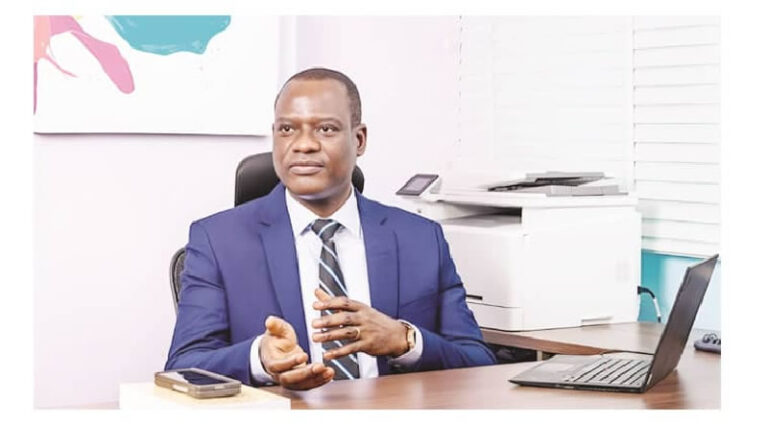
Juliet Ezeh
The Nigerian Economic Summit Group has issued a strong call for urgent action to close the widening gap between Nigeria’s macroeconomic stability and the struggling realities faced by businesses, as stakeholders gathered in Abuja to unveil the Nigerian Private Sector Outlook 2026 report.
At the centre of the discussions was a shared concern that while recent economic reforms are beginning to stabilise key indicators such as inflation, exchange rates and fiscal performance, these gains are yet to fully translate into improved productivity, stronger business performance and meaningful job creation across the economy.
The hybrid event brought together top government officials, private sector leaders and development partners, with the Minister of Finance and Coordinating Minister of the Economy, Taiwo Oyedele, delivering the keynote address.
Oyedele described Nigeria’s current economic phase as a critical transition from reform to consolidation, noting that the country is gradually moving from policy announcements to measurable outcomes.
He said over the past year, government reforms have focused on correcting long-standing structural imbalances, improving macroeconomic stability, strengthening fiscal frameworks and enhancing policy transparency. According to him, early signs of stability are emerging, including a more aligned exchange rate environment, improved fiscal performance and clearer policy direction.
However, he cautioned that stabilisation should not be mistaken for success.
“The real test now is moving from reform to growth,” he said, stressing that the ultimate goal must be tangible improvements in investment inflows, employment creation, productivity and living standards.
Reform Alone Is Not Enough, Says Finance Minister
The minister emphasised that investment decisions are driven not by policy announcements but by confidence, consistency and predictability. He noted that investors respond to environments where rules are stable and returns are reasonably assured.
To unlock sustainable growth, Oyedele outlined four key priorities, beginning with policy consistency. He warned that frequent policy reversals and mixed signals continue to weaken investor confidence and must be avoided if Nigeria is to attract long-term capital.
He also stressed the importance of reducing the cost of doing business, pointing to persistent structural bottlenecks such as multiple taxation, logistics inefficiencies, supply chain disruptions, energy constraints and regulatory overlaps.
According to him, these challenges continue to weigh heavily on businesses, particularly in the manufacturing and productive sectors.
The minister also highlighted access to finance as a major constraint, noting that government is working to strengthen domestic capital markets, expand credit availability and develop long-term financing structures for infrastructure and industry.
He added that productivity remains the missing link in Nigeria’s reform journey, arguing that macroeconomic stability alone cannot deliver growth without improvements in infrastructure, skills development, technology adoption and institutional efficiency.
Oyedele also called for stronger collaboration between government and the private sector, describing it as a “public-policy private partnership” necessary to drive sustainable development.
“No government can achieve this alone,” he said, urging alignment between policy direction, private sector investment priorities and development partner support.
He further encouraged private sector players to adopt a long-term investment outlook, expand formal operations and maintain transparency in governance and business practices.
While acknowledging risks such as inflationary pressures, global economic uncertainty, geopolitical tensions and domestic political cycles ahead of elections, he maintained that these challenges are manageable with discipline and cooperation.
NESG Flags Macro-Micro Disconnect in Economy
Earlier, Chairman of the Nigerian Economic Summit Group, Olaniyi Yusuf, described the launch of the Nigerian Private Sector Outlook 2026 as timely, coming at a crucial stage in the country’s reform journey.
He reaffirmed the organisation’s commitment to fostering constructive dialogue between government and the private sector, stressing that collaboration remains essential to building a competitive and resilient economy.
The central focus of the report was presented by NESG Chief Economist and Director of Research, Olusegun Omisakin, who highlighted what he described as a growing disconnect between macroeconomic improvements and real sector performance.
According to him, while headline indicators such as GDP growth, foreign reserves and inflation trends show signs of improvement, many businesses continue to struggle with high operating costs and weak productivity levels.
He noted that manufacturing, in particular, remains under pressure, with limited growth in output, low capacity utilisation and weak transmission of macroeconomic gains to firm-level performance.
Omisakin described this gap as the defining challenge of Nigeria’s current economic structure.
“The macroeconomic numbers are improving, but the lived reality of businesses tells a different story,” he explained, adding that the economy is yet to fully convert stability into productivity.
He said the report identified several emerging risks facing businesses, including talent shortages, customer losses, cybersecurity threats, supply chain disruptions and regulatory bottlenecks that vary across sectors.
The NESG chief economist stressed that addressing these challenges would require deliberate policy alignment aimed at strengthening enterprise growth, improving competitiveness and supporting productivity at the firm level.
AfDB Backs Nigeria’s Reform Agenda
Also speaking at the event, Director General of the African Development Bank Group’s Nigeria office, Abdul Kamara, commended Nigeria’s recent reform efforts, describing them as steps in the right direction.
He noted that the country has recorded improvements in key macroeconomic indicators, including GDP growth, easing inflationary pressures, exchange rate stability, improved non-oil revenue generation and stronger fiscal and external balances.
Kamara disclosed that the African Development Bank has approved a two-phase one-billion-dollar policy-based support operation for Nigeria, with the first tranche of 500 million dollars already approved and disbursed in 2024.
He explained that the funding supports structural reforms in the energy sector, tax policy reforms, electricity market restructuring, clean cooking initiatives, renewable energy targets, gender inclusion in energy access and the presidential metering programme.
He also praised government efforts to restructure tax administration into a single national revenue service, describing it as a move that will improve efficiency, transparency and digitalisation of tax collection processes.
Private Sector Voices Call for Action
The event also featured a panel discussion involving senior executives and policy experts, including Olakunle Alake, Vice President of Dangote Industries Limited; Professor Mutiu Oyinlola, Chief Economist of the Bank of Industry; Ashish Khemka, Director of Finance and Operations at Lagos Free Zone Company; Dr Emmanuel Okeleji, Chief Executive Officer and Co-founder of SeamlessHR; and Mrs Boladale Adeyinka, Director of Surveillance and Investigations at the Federal Competition and Consumer Protection Commission.
Discussions focused on practical strategies for improving productivity, reducing structural constraints and sustaining the momentum of ongoing reforms.
Panellists emphasised the need for stronger infrastructure, better regulatory coordination, improved access to finance and greater investment in human capital development.
They also stressed that policy consistency remains critical for private sector confidence, warning that uncertainty continues to discourage long-term investment decisions.
Call for Coordinated Growth Strategy
The summit concluded with a renewed call for coordinated action between government, the private sector and development partners to ensure that Nigeria’s reform agenda translates into inclusive economic growth.
Stakeholders agreed that while progress has been made at the macro level, urgent attention is needed to ensure that businesses experience real improvements in operating conditions.
The overarching message from the summit was clear: Nigeria’s reforms have created a foundation for stability, but the next phase must focus on turning that stability into jobs, productivity, competitiveness and improved living standards for citizens.