
Juliet Ezeh
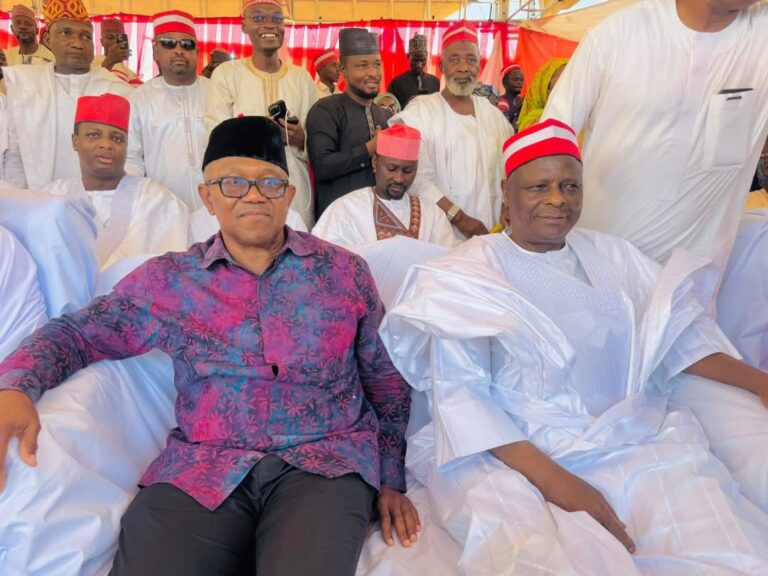
A quiet but increasingly intense political realignment is unfolding within the African Democratic Congress (ADC) as former governors Peter Obi and Rabiu Kwankwaso reportedly intensify efforts to secure a joint presidential ticket ahead of the 2027 general election, anchored on a controversial one-term power rotation agreement.
Multiple party insiders say the two opposition figures are building a strategic alliance aimed at consolidating northern support for a southern presidency, with Obi projected as the expected flag bearer under a pledge to serve only one term if elected.
The development is already reshaping internal dynamics within the ADC, where a fierce contest for the party’s presidential ticket is emerging between several high-profile political actors, including former Vice President Atiku Abubakar.
Northern strategy and one-term bargaining
Sources within the party disclosed that Obi and Kwankwaso’s political camps have intensified consultations with influential northern stakeholders, traditional rulers, and political blocs in recent weeks, seeking to secure backing for their proposed arrangement.
At the core of their campaign is a political bargain: support for a southern presidency in 2027 in exchange for a written or publicly affirmed commitment that Obi would serve only a single four-year term.
Party insiders say Kwankwaso’s political network has been particularly active in the North, engaging stakeholders who had previously shown interest in supporting Atiku Abubakar’s presidential bid.
The argument being advanced by their camp is rooted in what they describe as “political fairness,” insisting that the South must be allowed to complete its expected eight-year turn in the presidency after the North’s long tenure in previous administrations.
One senior party figure, who spoke on condition of anonymity, said the messaging has been consistent across engagements.
“The South should be allowed to complete its eight years. The North has had its turn, and what we are doing now is pushing for balance,” the source said.
He added that Obi has allegedly agreed to the one-term condition as part of efforts to build trust among northern stakeholders, while Kwankwaso is actively marketing the arrangement across his political base.
Emerging Obi–Kwankwaso alliance
Political activities within the ADC suggest that the Obi–Kwankwaso alignment is no longer informal. On April 20, supporters of both politicians reportedly inaugurated a movement known as the Obi–Kwankwaso Movement to mobilise support ahead of the party primaries.
Party insiders say the group is designed to serve as a coordination platform for grassroots mobilisation, delegate engagement, and stakeholder negotiations ahead of what is expected to be a highly competitive primary election.
Kwankwaso, who formally joined the ADC on March 30, 2026, is believed to be central to efforts to secure northern endorsement for the alliance. Obi’s entry into the coalition space, meanwhile, has strengthened the southern bloc within the party.
However, analysts say the alliance is still being tested by internal trust issues, particularly around the enforceability of the one-term agreement, which some northern stakeholders reportedly want formalised before giving full backing.
Atiku factor and internal resistance
Former Vice President Atiku Abubakar remains a dominant figure within the ADC presidential race, with several party stakeholders acknowledging his longstanding influence and established political structure.
Atiku, who previously served as vice president from 1999 to 2007, has already declared that the 2027 election will be his final attempt at the presidency, a move seen as part of efforts to consolidate his support base within the opposition coalition.
However, sources within the party suggest that his path to the ADC ticket is facing growing resistance, particularly from southern aspirants who fear his influence may overshadow internal competition.
A former member of the House of Representatives from Kwara State and supporter of Atiku, who requested anonymity, admitted that Kwankwaso has been actively engaging northern stakeholders to shift support toward the Obi–Kwankwaso arrangement.
According to him, the strategy is not only about 2027 but also about positioning Kwankwaso for future political relevance.
“Kwankwaso is meeting northern leaders and trying to convince them to support the Obi–Kwankwaso ticket. The idea is that if Obi does one term, Kwankwaso could emerge stronger in 2031,” he said.
He, however, insisted that Atiku still maintains significant influence across the North and remains the most established figure within the ADC structure.
Political calculations and regional balancing
The unfolding negotiations highlight a broader struggle over zoning, rotation, and regional balance in Nigeria’s presidency.
Supporters of the Obi–Kwankwaso arrangement argue that the political stability of the country depends on an informal agreement that alternates power between the North and South, ensuring inclusivity and reducing tensions.
Critics, however, see the one-term proposal as politically fragile, arguing that such agreements are rarely enforceable once power is secured.
Some analysts also warn that internal disagreements within the ADC could weaken the party’s ability to present a united front against the ruling party in 2027.
A political commentator familiar with opposition dynamics said the ADC risks entering the election cycle divided if consensus is not reached.
“The reality is that everyone is building their own coalition within the coalition. Obi, Kwankwaso, Atiku, and others are all negotiating separately with northern and southern blocs,” he said.
Party leadership response
The ADC leadership has maintained a neutral position on the unfolding alignments, insisting that internal consultations and political negotiations are part of democratic processes.
The party’s National Publicity Secretary, Bolaji Abdullahi, said all aspirants are free to engage in consultations and build alliances ahead of the primaries.
He added that the party remains committed to ensuring that its presidential candidate emerges through consensus where possible, or through a transparent primary process if consensus fails.
“We will continue to preach unity and collective interest. As a party, we will ensure our candidate emerges through consensus,” he said.
Uncertain road to 2027
Despite the growing momentum around the Obi–Kwankwaso alliance, uncertainty still surrounds its durability and political viability.
Key stakeholders remain divided over zoning arrangements, trust agreements, and the influence of established political figures like Atiku Abubakar.
Political observers say the coming weeks will be critical as the ADC moves closer to defining its internal structure and selecting its presidential candidate.
With consultations intensifying and competing alliances forming across regions, the party appears headed toward one of its most competitive and unpredictable primaries in recent years.
For now, the battle for the ADC ticket is no longer just about individual ambition it is increasingly a contest over regional power balance, political trust, and the future direction of Nigeria’s opposition politics.